The Hintons Who Sued Jane Austen's Brother, and the Awkward Business of Finding Them in My Own Family Tree
By Emma · August 20, 2026A great many people claim some connection to Jane Austen. I am, technically, one of them, a fourth cousin some number of times removed, which is the kind of genealogical fact that sounds impressive at a dinner party and means considerably less than it sounds like it should. I mention it only to get it out of the way, because this essay isn't really about that. It's about a much closer, much less flattering connection, one I didn't go looking for and would happily have never found.
My great-great-grandmother was a Hinton. Trace the family back a generation or two, to the years Jane Austen was actually alive, and my direct ancestor was a very close relative of John Knight Hinton, who sued Jane Austen's brother for the house she was living in.
What the Lawsuit Was Actually About
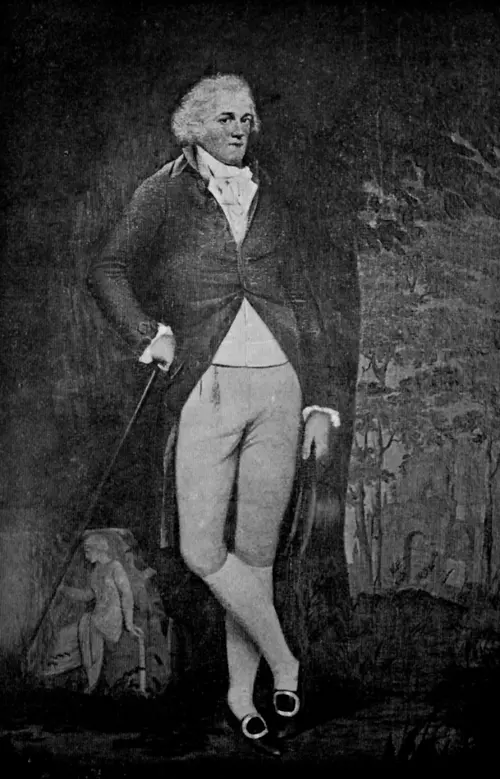
In October 1814, the Hinton family of Chawton Lodge, together with their relation James Baverstock, served a legal claim against Edward Austen Knight, Jane's brother, for possession of his Hampshire estates, Chawton among them. The claim rested on a fairly technical argument: that the deed disentailing the property (hey, that was a popular phrase in Pride and Prejudice), drawn up decades earlier when Edward's adoptive family had cut off an older inheritance line, had been improperly executed. If that argument succeeded, the Hintons stood to inherit land and income that had been Edward's for years, and Edward stood to lose roughly two thirds of his property in the process.
There's a detail here worth sitting with for a moment, because it will matter later: the Hintons weren't distant strangers pursuing an abstract legal claim. They lived at Chawton Lodge, directly across the road. Whatever this lawsuit was, it wasn't conducted at any comfortable remove.
An Uncomfortable Parallel, Coming Soon
Edward's whole claim to Chawton existed because he'd been adopted as a boy into the wealthy, childless Knight family and inherited their estates in place of any blood relation. That's not incidental to the Hintons' argument, it's close to the center of it. They were, in effect, arguing that an outsider brought in by adoption shouldn't hold what blood connection might otherwise have claimed.
If that structure sounds familiar, it should. Austen would go on to build a very similar situation into Emma, where Frank Churchill holds his fortune and his name entirely through adoption into the Churchill family, standing in for a birth lineage that has no real claim on either. I'll leave the fuller version of that comparison for its own piece, which I'll link here once it's written, but it's hard not to notice that Austen was already several months into writing Emma when the Hinton-Baverstock suit was formally served on Edward in October 1814, and she kept writing it, adoption and inheritance and all, for another five months while the case hung over her brother's house.
What This Cost Jane, in Real Time
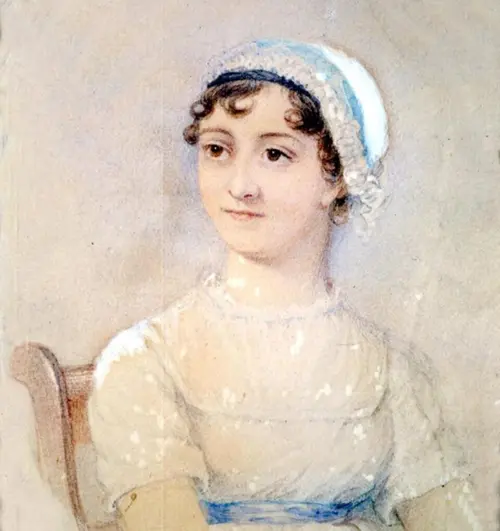
It's worth being precise about what this actually threatened, because "lawsuit" undersells it. If the Hintons had won, Edward's mother and sisters, Jane included, stood to lose the home he'd given them free of rent in 1809: Chawton Cottage, the first stable, permanent house Jane Austen had lived in since her father's retirement forced her family out of Steventon Rectory in 1801. Between 1801 and 1809, the Austen women had moved repeatedly, Bath, Southampton, a string of temporary arrangements, before Edward's gift finally gave them somewhere to stay put. The lawsuit was, in the most literal sense, a threat to take that back.
Jane's own letters show the toll it took on the family, even secondhand. She spent the autumn of 1815 staying with her brother Henry in London while he recovered from a serious illness, and in a letter to Cassandra from that visit, she mentions Henry reading her what he'd written to Edward about the case, adding that part of it must have amused him, and one part, she writes, could not have been very amusing to anybody. In the same letter she wonders how Henry is managing to get better at all with such business on his mind. The case dragged on for four years. Jane Austen died in July 1817, roughly a year before it was finally settled, in 1818, when Edward paid the Hintons and Baverstocks £15,000 to drop their claim for good. She never got to know for certain that Chawton would stay in the family.
The House Itself
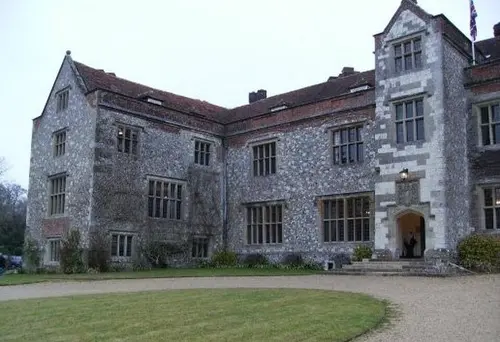
It's hard to overstate how much that house meant to her. Chawton Cottage wasn't grand. It was a modest former farmhouse on the estate that Edward had fitted up for his mother and sisters, but after eight years without a permanent address, it gave Jane something she badly needed: stability, routine, and a writing desk she didn't have to pack up every few months. The years there were, by a wide margin, her most productive. She revised Sense and Sensibility, Pride and Prejudice, and Northanger Abbey there, and wrote Mansfield Park, Emma, and Persuasion from start to finish within those walls. Almost everything we now think of as Jane Austen's body of work exists because that house existed first.
It's not a coincidence, I think, that the fear of losing a home shows up so often in her novels. The Dashwood women are pushed out of Norland by an indifferent half brother in Sense and Sensibility. The Elliots have to let Kellynch Hall to strangers because Sir Walter can't manage his own finances in Persuasion. The Bennets face losing Longbourn entirely when their father dies in Pride and Prejudice, since the estate is entailed away from his daughters. Austen wrote about the precariousness of a woman's claim to a home again and again, not as an abstract social observation, but as something she'd lived through directly, more than once, and was living through again, quietly, while the Hinton lawsuit sat unresolved in the background of her final, most productive years.
Putting It Together
I did not know any of this until earlier this year when I decided to look at genealogy and my family tree and the Hinton name meant nothing to me until it did, until I was far enough into my own family history to recognize it, and realized I already knew exactly who the Hintons were and exactly what they'd tried to take.
I want to be honest that the moment those 2 facts connected, my own genealogy and the family name I'd read about in Austen biographies for years, I felt something closer to guilt than curiosity. Not rational guilt, I didn't do any of this, none of it happened anywhere near my lifetime, but a real, physical discomfort all the same, the specific unease of realizing you have a personal stake, however distant, on the wrong side of a story you love. I've read Persuasion and Sense and Sensibility as novels about displacement and inheritance more times than I can count. I did not expect to find out my own family tree had a hand in nearly causing one, in real life, to the woman who wrote them.
I don't know what to do with that discomfort except write it down honestly, which is what this is. I can't undo a lawsuit filed two centuries before I existed. I can, at minimum, stop pretending it isn't part of my own history, and maybe that's the only honest tribute available to me: not distance, not a clever genealogical flex, just an accurate account of exactly how my family and hers actually crossed paths.
Don't Miss the Next One
New essays and travel guides don't run on a schedule, they go up when there's actually something worth saying. Subscribe and I'll let you know the moment one does.
Subscribe to the Newsletter →More from the Literary Journal
Why I Associate With Emma Woodhouse
Read Essay →The Parent Trap Is Built Out of Jane Austen Tropes
Read Essay →