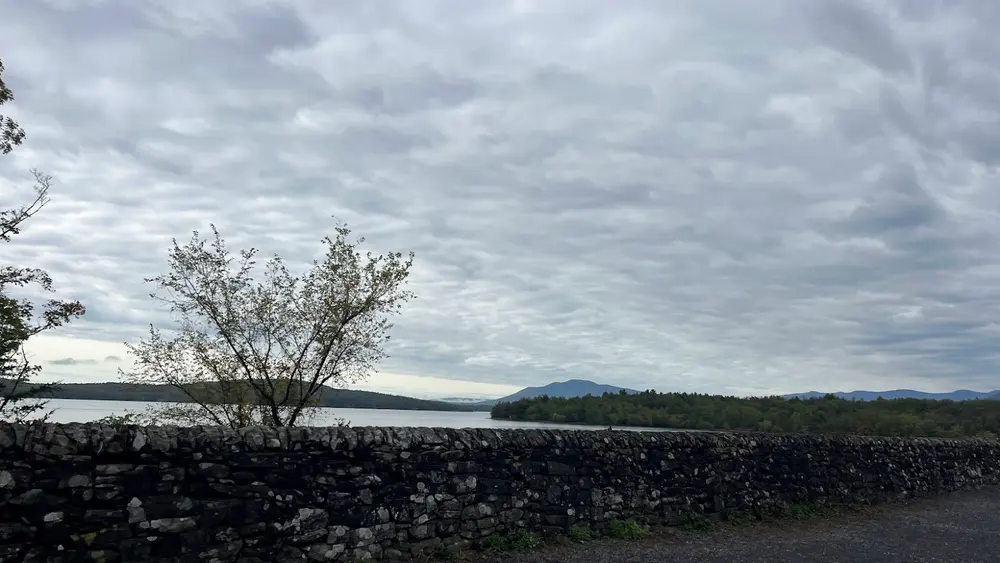
The Ashokan Reservoir from the rail trail on the north shore. The valley under that water held a dozen hamlets before 1915. The trail on this bank was closed railroad land for a century and only opened to the public in 2019.
The mountains New York City has been escaping to for two hundred years, from the Hudson River School painters to the Borscht Belt resorts behind Dirty Dancing to the farm towns being rediscovered now.
Last Updated: August 30, 2026
The Catskills spread across four counties west of the Hudson, and these times are for the central mountains around Phoenicia and the Ashokan Reservoir. There is no longer a passenger train into the range. The nearest Amtrak stop is Rhinecliff, across the river, and Trailways buses run from New York to Kingston, Phoenicia, and the Sullivan County towns. The times below are for driving.
The Catskills are not really one place. They are a rumpled block of mountains west of the Hudson, spread across four counties, and for most of their history the different corners had almost nothing to do with one another. What they share is New York City. The city has been coming up here to get away from its own heat and noise since before the Civil War, and every version of that escape has left something behind.
The first wave built grand hotels along the eastern wall of the range, where the mountains drop straight down to the river. The Catskill Mountain House opened above Palenville in 1824, one of the earliest mountain resorts in the country, and the painters arrived with the guests. Thomas Cole walked these clove trails and painted them, and what we now call the Hudson River School more or less started on that escarpment. The Munsee Lenape and the Mohican had lived here for thousands of years before any of it, and the Dutch had already stuck the range with its odd cat-related name, but the tourist Catskills begins with that one hotel and those painters.
Then the mountains got used hard. Tanneries stripped the hemlock forests for the bark, quarries cut bluestone for city sidewalks, and by the time the railroads came through the old growth was mostly gone. New York wrote the Forest Preserve into law as "forever wild" in 1885, which is the reason so much of the range is dark green again today.
The version of the Catskills most people carry around without realizing it is the Borscht Belt. From the 1920s into the 1970s, the towns of Sullivan County and southern Ulster County filled up every summer with hundreds of resorts and boarding houses built for Jewish families from the city, who were turned away from most other American resorts. The big houses, Grossinger's and the Concord and Kutsher's and Brown's, had their own airstrips, golf courses, and nightclubs. The comedians who worked that circuit, the ones who coined the Jewish Alps and worse, became most of American comedy for a generation.
If you have seen Dirty Dancing, you have already visited one of these places. Kellerman's is invented, but the screenwriter Eleanor Bergstein spent her childhood summers at Grossinger's and built the resort in the film out of that memory. The movie was shot in Virginia because by 1986 the real thing was already closing down. Here is the part that earns it a spot in a guide about Jane Austen. Kellerman's runs on exactly the machinery Austen spent her career watching. It is a sealed season in a fixed place, where a certain set of families goes to perform its leisure and steer its marriageable children toward approved company. Baby is the good daughter expected to make a sensible match. Johnny Castle is Captain Wentworth before the prize money, dismissed as an impossible match because he has no fortune and no name, and the whole plot runs along the line between the paying guests and the people who work for them. Put a bonnet on it and the summer romance is an Austen novel about class. The Borscht Belt has a permanent place on my list of Austen settings and their Northeast doubles.
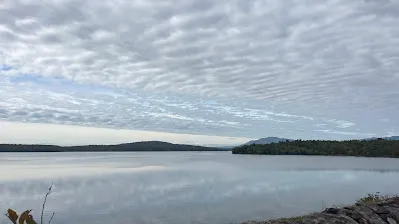
My favorite easy morning in the Catskills is the Ashokan Rail Trail. It runs 11.5 miles along the north shore of the Ashokan Reservoir, on the bed of the old Ulster and Delaware Railroad, paved and smooth and close to flat. You can walk a mile of it or ride the whole length. The views across the water to the high peaks are the kind of thing people drive a long way for, and it costs nothing.
The reservoir itself has a harder story. Between 1907 and 1915 New York City dammed the Esopus Creek and flooded the valley to build it. About a dozen hamlets went under, including a village that was actually named Olive, and roughly 2,000 people were moved out, some with ten days notice. More than 2,600 graves were dug up and carried to other cemeteries. The reservoir still supplies something like 40 percent of the city's drinking water, and the railroad bed only became a trail because the city finally opened the land in 2019, after keeping it closed for a hundred years.
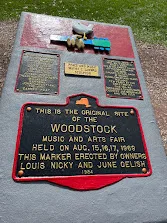
People come to the town of Woodstock looking for the field, and the field is not there. Woodstock is a real and pleasant arts town, full of galleries and a good bookstore, and it lent its name to the festival because the organizers had first hoped to hold the thing somewhere nearby. When that plan collapsed they moved it about 60 miles southwest to a dairy farm in Bethel that belonged to a man named Max Yasgur. That is where the 400,000 people actually were, in August 1969.
The Bethel site is worth the drive if you care about it at all. It is Bethel Woods Center for the Arts now, with a serious museum and a concert lawn that slopes down the hill exactly the way it does in the photographs. Standing at the top of that field is a strange feeling. I went on a quiet weekday and had most of it to myself.
I come in the fall. Late September and the first half of October, the sugar maples turn and the whole range lights up, and it really is some of the best foliage in the Northeast. The catch is that everyone else knows this too, so a Saturday on Route 28 can crawl.
Summer is for the swimming holes. The mountain streams pool up behind rock ledges all through the range, cold and clear, and locals keep the best ones to themselves. It is also concert season, at Bethel Woods and at the smaller rooms. Spring is mud season, roughly March into April, when the dirt roads go soft and a lot of the seasonal places stay shut. Winter is quiet and lovely and built around the ski mountains at Hunter and Windham.

The Phoenicia Diner sits right on Route 28, a 1962 diner car that a former advertising man named Mike Cioffi took over and reopened in 2012. It looks like a diner and behaves like one, chrome and booths and a counter, but the kitchen buys from Hudson Valley farms and the breakfast is very good. There is almost always a wait on a weekend morning, and it is worth it.
Over on the Sullivan County side, in Livingston Manor, the Kaatskeller opened in 2017 out of the same people who run the Main Street Farm shop. It does wood-fired pizza and cocktails in a tall room full of skylights, with a backyard of bocce and string lights. Livingston Manor has turned into one of the livelier small towns in the mountains over the last ten years, and this is where everyone seems to end up after dark.

Roscoe calls itself Trout Town, USA, and won the title fairly from a fishing network. In 2013 a group of residents put the name on the Roscoe Beer Company, the first brewery in the county, on a road just east of the village. The tasting room pours their Trout Town ales, there is usually a food truck, and we ate a box of fish tacos and fries at a picnic table, which felt like the right way to do it.
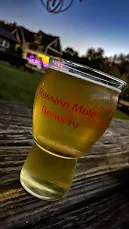
Deeper into the mountains, in the tiny hamlet of Claryville, the Russian Mule Brewery makes what the name promises, Russian-leaning styles from pilsners up to imperial stouts, in a restored building with a pressed tin ceiling on the Neversink River. It is a real detour, well off the main roads, and the beer and the valley both pay you back for it.
The bottom line: the Catskills are a two hundred year old escape hatch for New York City, and every version of that escape is still here somewhere if you know where to look. Come for a fall weekend, walk the rail trail, drive out to Bethel, eat at the diner, and pick one brewery in a town you have never heard of.
The essentials, at a glance.
The Ashokan Reservoir from the rail trail on the north shore. The valley under that water held a dozen hamlets before 1915. The trail on this bank was closed railroad land for a century and only opened to the public in 2019.
Lunch at the Roscoe Beer Company, out on a back road east of the village that calls itself Trout Town, USA. Order at the window, carry it to a picnic table, and work through a flight of the Trout Town ales.
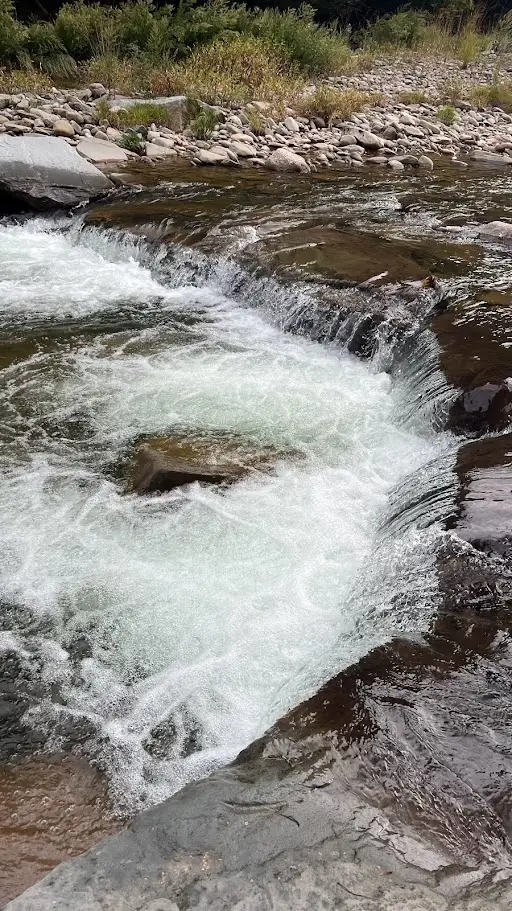
A cascade on the stream near Claryville, deep in the southern Catskills on the way to the Russian Mule Brewery. Half the pleasure of the mountains in summer is finding a ledge like this one and sitting on it.
I made the Bath case up in the Borscht Belt section. Kellerman's in Dirty Dancing is a resort run on the same equipment Austen wrote about for twenty years, a fixed season, a closed circle, marriageable children on display, and a hard line between the paying guests and the staff. Johnny Castle is Captain Wentworth before the prize money, waved off as an impossible match because he has no fortune and no name. Baby's father comes around for the same reason Wentworth eventually becomes acceptable in Persuasion, which is that the young man turns out to have been the better person the whole time and everyone above him has been snobbish and wrong. For the Persuasion version of that quarrel, I wrote about Anne Elliot and her sisters separately.
The second thread is quieter, and it is about ruins. When the Musgroves take Anne to Lyme in Persuasion, they go out of season, and Austen dwells on the way a resort town looks once the visitors have gone, the shut-up lodgings, the melancholy air, a place built for a crowd that is not there. That is the Catskills more than people expect. The Borscht Belt did not slowly fade so much as empty out, and the woods behind Sullivan County are full of collapsed hotels, drained swimming pools, and the concrete footings of buildings that once slept a thousand guests. A drive through those towns is a drive through Lyme in November. It gives the mountains a particular kind of beauty, and it is a very Austen lesson that the off season can tell you more about a place than the crowd ever did.
Lenox and the Berkshires sit just across the state line to the east, the next range over, telling the same story of city people coming up for the summer through symphony concerts and Gilded Age cottages instead of bungalow colonies and rock festivals. Further north, Stowe, Vermont is the Green Mountain version, a hill town that turned skiing into a whole identity.
If the Dirty Dancing argument lands for you, Mystic, Connecticut is the home of Mystic Pizza, which runs the same class engine, the working town kids in the kitchen against the country-club summer people, straight out of Pride and Prejudice.
Don't Miss the Next One
New essays and travel guides don't run on a schedule, they go up when there's actually something worth saying. Subscribe and I'll let you know the moment one does.
Subscribe to the Newsletter →About 2 hours by car, roughly 115 miles up the New York State Thruway to Kingston and then west on Route 28. There is no passenger train into the mountains anymore. Trailways buses run from the Port Authority to Kingston, Phoenicia, and the Sullivan County towns.
No. Dirty Dancing was shot in Virginia and North Carolina in 1986. Kellerman's, the fictional resort, is modeled on the Borscht Belt hotels of the Catskills, and the screenwriter Eleanor Bergstein based it on her own childhood summers at Grossinger's in Sullivan County.
On Max Yasgur's dairy farm in Bethel, New York, about 60 miles southwest of the town of Woodstock. The site is now Bethel Woods Center for the Arts, with a museum and a concert lawn on the original field.
An 11.5 mile paved and stone-dust path along the north shore of the Ashokan Reservoir, between West Hurley and Boiceville. It opened in 2019 on the bed of the old Ulster and Delaware Railroad and is open year round for walking and biking, with no fee.
Yes. The towns are small and spread across several counties with almost no public transit between them, and the trailheads, breweries, and swimming holes are all miles apart on mountain roads. A car is essential.
Late September and early October for the foliage, which is some of the best in the Northeast. Summer is warm and green and good for swimming holes and concerts. March and April are mud season and many places close, so check before you go.
Pin this guide for your next trip to the Catskills!
Pin ItNot seeing a pin ready to save? Follow along for more here: Emma Shorebreak's Northeast Travel board on Pinterest
More of the Catskills, and wherever the next drive takes me, over on Instagram.
Follow @emmashorebreak →