Brunch on the river, an inn that's centuries old, and a tower with a view that would feel right at home in Emma.
Last Updated: August 20, 2026
Getting to New Hope
Approximate driving distance and time via major highways, for planning purposes only.
From Philadelphia, PA (City Hall)
50 min
~35 miles
From New York City, NY (Times Square)
1 hr 30 min
~75 miles
From Boston, MA (Faneuil Hall)
4 hr 55 min
~280 miles
A Short History of New Hope
New Hope isn't far from where I grew up. I'm a lifelong Bucks County resident, and for years I dismissed it as just some town nearby, one of those places you visit without ever really stopping to look at it for what it was. It wasn't until I got older that I actually appreciated what was here, the beauty of it, the art scene, and a food scene I'd put up against anywhere in the Philadelphia suburbs.
New Hope didn't start out as New Hope, and the name hides at least three other towns underneath it. The land belonged to the Lenni-Lenape until 1758, when a treaty with colonists signed it over for good. William Penn's family had already granted the surrounding thousand acres as payment of a debt, and by 1700 a man named Robert Heath had settled the area and built the first of what became many mills along the creek. John Wells bought a piece of that land in 1722 and opened a ferry crossing for travelers moving between Philadelphia and New York on the Old York Road, and the town took his name first, Wells' Ferry. A generation later it became Canby's Ferry, then Coryell's Ferry, passing along with each new ferry operator. Just down the river from here, at what's now Washington Crossing Historic Park, George Washington crossed the Delaware on Christmas night in 1776 on his way to Trenton.
Benjamin Parry, one of the town's founders, built the Georgian fieldstone house now known as the Parry Mansion in 1784, the same decade a young Jane Austen was growing up an ocean away, and walking through its period rooms today genuinely feels like stepping into her world of formal parlors and decorative moldings. Parry's first grist mill stood on the site the Bucks County Playhouse occupies today, and when a fire destroyed the rebuilt Hope Mills in 1790, the town took the name of the new mill built in its place. New Hope wasn't formally incorporated as its own borough until 1837.
From Ferry Village to Art Colony
New Hope reinvented itself once as a mill town and again, a century or so later, as an art colony. Painters started arriving in the early 1900s, drawn by the same river light that still draws photographers to Main Street today, and the group that formed here became known as the Pennsylvania Impressionists, a movement still studied alongside the better known art colonies of the Northeast. The town's biggest cultural landmark from that era is the Bucks County Playhouse, built on the footprint of Parry's original grist mill. A band of Broadway artists, including playwright Moss Hart, saved the building from demolition in the 1930s, and it opened on July 1, 1939 with a production of Springtime for Henry. Harvey and Neil Simon's Barefoot in the Park both ran on this stage before either ever reached Broadway, and I've sat through more than one production here that felt every bit as sharp as something I'd catch in New York.
New Hope's LGBTQ+ History
New Hope has been a haven for artists and performers, and for the LGBTQ+ community specifically, since at least the 1940s, when the same creative crowd drawn in by the art colony made the town a place people could show up as themselves. That history became official policy in 2002, when New Hope Borough Council passed an ordinance banning discrimination against LGBTQIA+ residents in housing, employment and public accommodations, the first borough in Pennsylvania to do so. The town won the Human Rights Campaign's Equality Award for it, and several neighboring boroughs followed New Hope's lead in the years after. It's the same instinct I found waiting for me in Provincetown, a town on the opposite end of my travels that built its own reputation as an LGBTQ+ haven out of a nearly identical mix of artists, acceptance and a place willing to remake itself.
Best Time to Visit New Hope
Spring and early summer bring the town its best patio weather, and a brunch on the river at Odette's is about as good a way to start that season as I've found. Fall turns Main Street into a proper Bucks County postcard. Winter empties out the crowds but not the town itself, a hearty meal at Karla's followed by something colder and more experimental at Human Robot Brewing makes a strong case for New Hope as a year round destination rather than a fair weather one. December is really its own season entirely, mostly because of Peddler's Village, the storybook holiday market just up the road, all brick pathways and colonial style shopfronts strung with enough lights to make even the least sentimental visitor reach for a cup of cider. I've gone back to see it a second time in the same season and it held up every bit as well as the first visit.
Where to Eat and Shop on Main Street
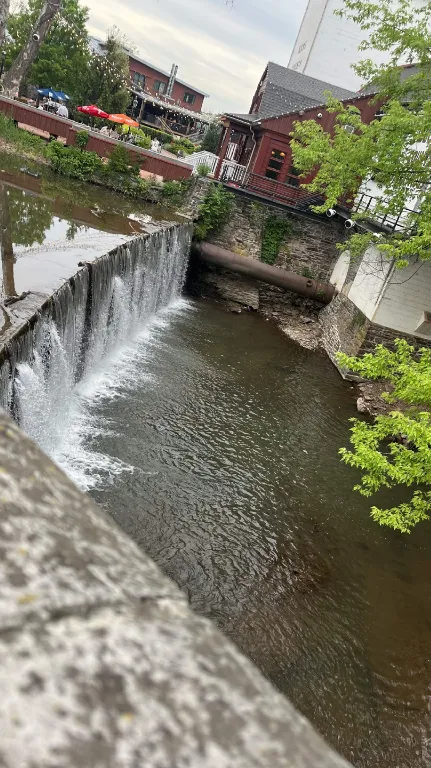
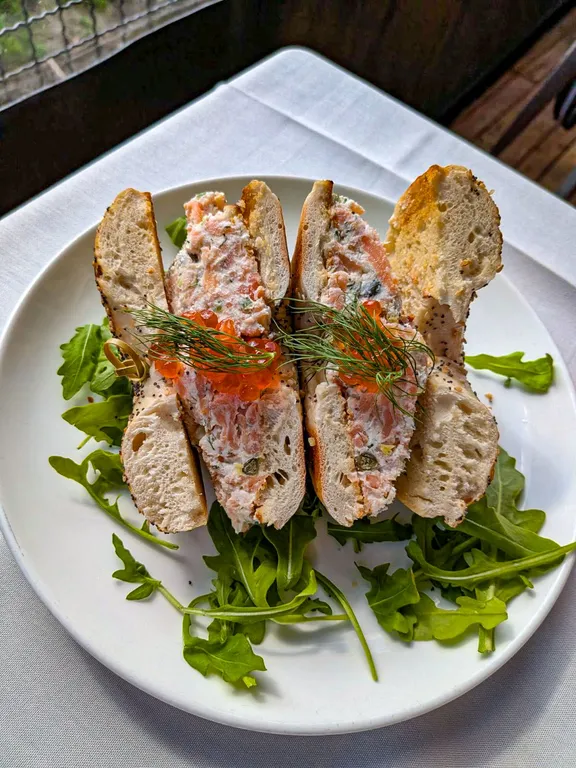
Main Street and the block of Mechanic Street just off it hold almost everything worth doing in town. Odette's, poised on the site of French cabaret performer Odette Myrtil's 1920s nightclub inside a building with roots back to 1784, is where I go for brunch on the water, and the lox bagel crowned in caviar is worth the trip on its own. The Logan Inn, opened as the Ferry Tavern back in 1727 by the same John Wells who ran the town's original ferry, still serves dinner with the easy competence of a place that's had three centuries to get it right. Karla's has been on Mechanic Street since 1978 and remains my go to on a cold night, hearty enough for the season every time.
Havana, a little further down at 105 South Main Street, has been pouring tropical drinks since 1978 out of one of the oldest houses in town, and the patio overlooking Main Street is genuinely one of my favorite spots in New Hope for exactly that, the vibe of the place. Nina's Waffles, a few doors down, does proper Belgian liege waffles alongside more than a hundred flavors of house made ice cream, and honestly nothing beats waffles and ice cream in the same sitting. Nektar, the wine bar across from the Bucks County Playhouse, is worth a visit for the building alone, a glassed conservatory that looks straight down the creek toward the Delaware, paired with genuinely good small plates, cocktails and wine.
Stella, inside the Ghost Light Inn on South Main Street, seats you right along the rail facing the Delaware River, and the cheese board is reason enough to stop even before the view does its work. The Ferry Market, a food hall a block off Main Street, packs in a dozen or so independent vendors under one roof, everything from wood fired pizza to Peruvian food to a proper wine bar, easily the fastest way to please a group with different cravings in one stop. Martine's RiverHouse, right on the water on Ferry Street, has food to match its two tier patio looking out over the Delaware, a combination that's hard to find anywhere else in town. And Burgerly, on South Main, is a small spot with a serious burger, my father's favorite in the whole area, for whatever that's worth.
The Bottom Line
The bottom line: New Hope is one of those towns that rewards slowing down. You could spend a single afternoon on Main Street and call it a successful trip, or you could stay the whole weekend and still leave a restaurant or two for next time.
Quick Facts
The essentials, at a glance.
Incorporated
1837
Main Street
Riverfront
Runs along the Delaware
Landmark
125 ft
Bowman's Hill Tower, completed 1931
Known For
Arts & LGBTQ+
First PA borough with an LGBTQ+ ordinance
New Hope Through the Seasons
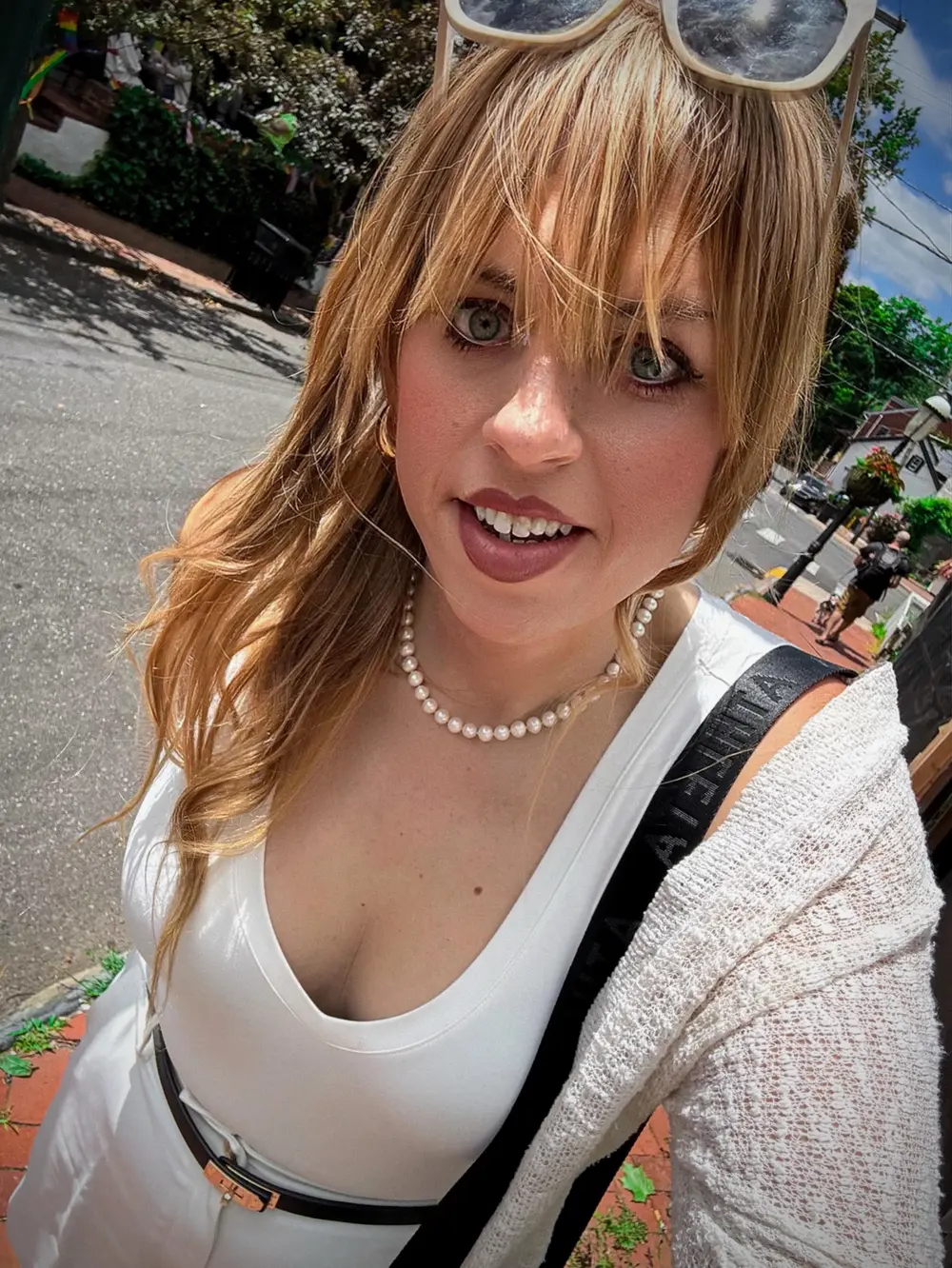
Brunch at Odette's, a river-facing institution with a terrace fit for lingering, is best approached with a lox bagel crowned in caviar and cream cheese, a small extravagance New Hope seems to specialize in. The afternoon continued at Nektar Wine Bar, confirming its status among the best brunch spots in New Hope, PA for anyone planning a Bucks County weekend.
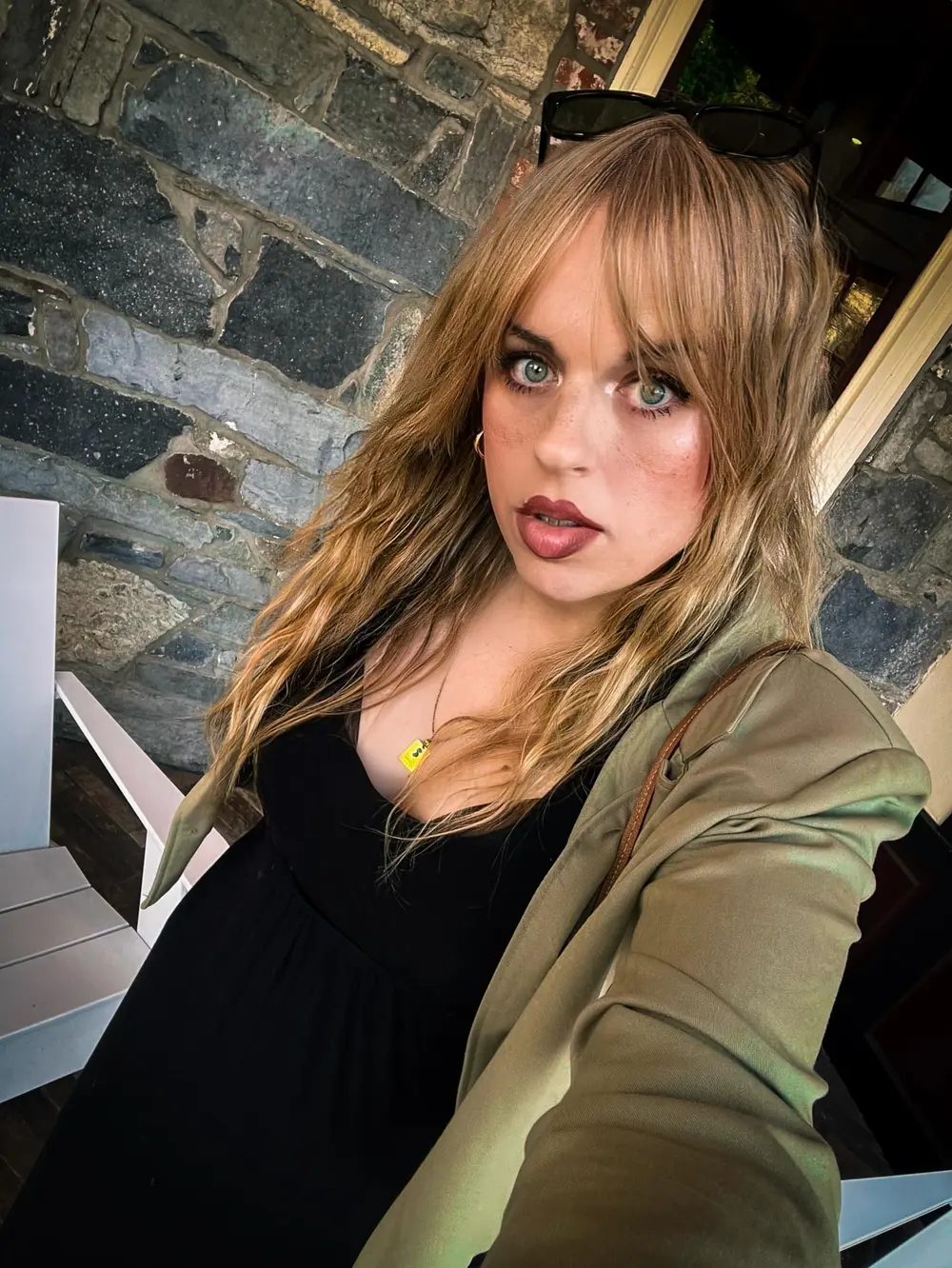
The Logan Inn, one of the oldest continuously operating inns in the country, serves dinner with the sort of unfussy competence that has apparently satisfied guests since the 1700s. It remains a dependable answer to where to eat dinner in New Hope, PA, ghosts or no ghosts.
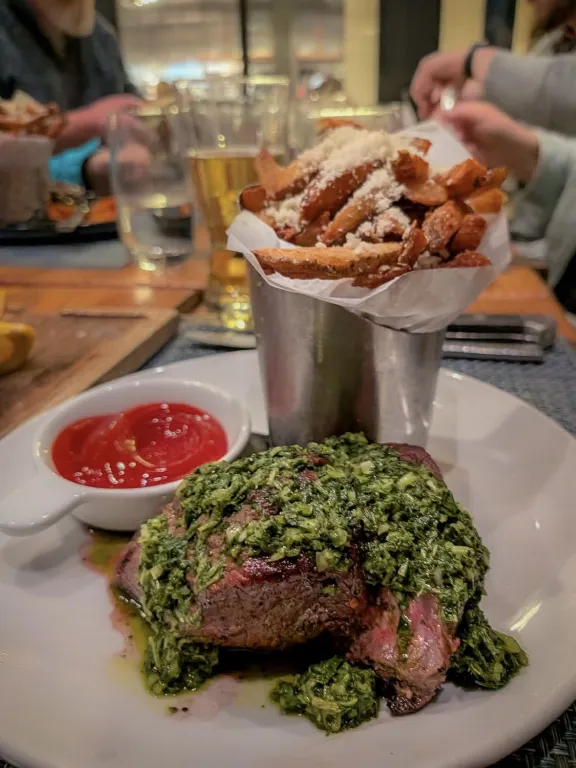
A winter visit to New Hope called for Karla's, whose menu is exactly hearty enough for the season, followed by a stop at Human Robot Brewing for something colder and considerably more experimental. Between the two, it is a strong argument for New Hope, PA as a year-round, not merely autumnal, destination.
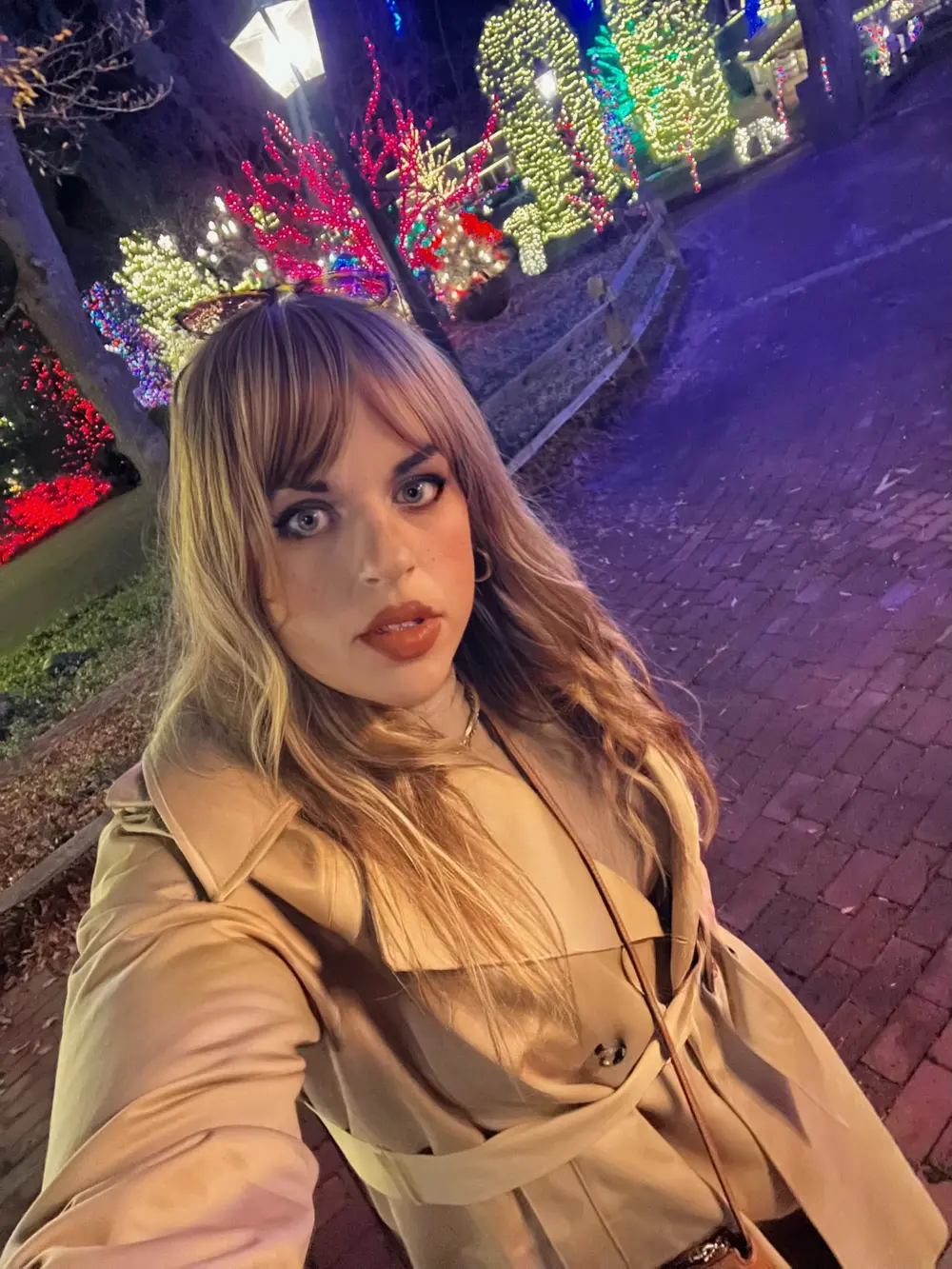
Peddler's Village, strung with lights each December, transforms into precisely the sort of storybook holiday market that makes a Bucks County Christmas itinerary write itself, all brick pathways, colonial-style shopfronts, and enough twinkling lights to make even the most committed cynic reach for a cup of cider.
A second visit to Peddler's Village during the holidays only confirmed the first impression: this remains one of the best Christmas lights displays near New Hope, PA, worth the return trip and the inevitable crowd of fellow admirers.
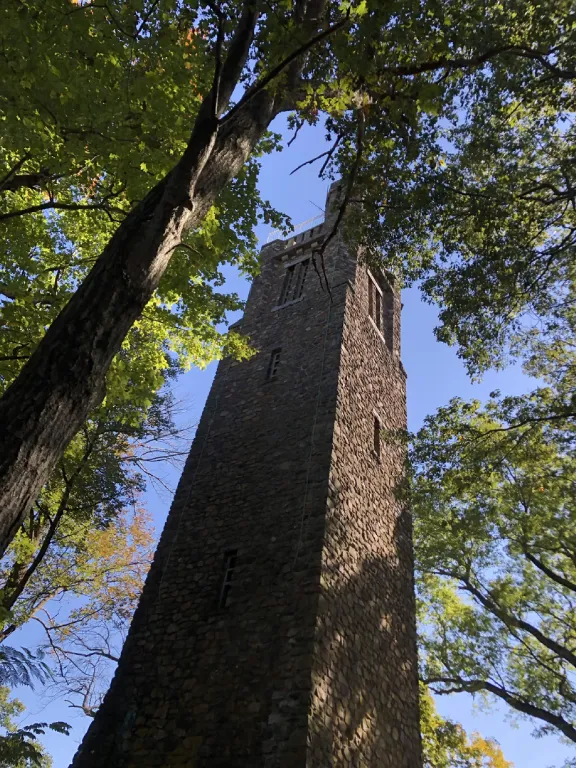
Jane Austen never set foot in Bucks County, obviously, but Emma gives us Box Hill, a real beauty spot in Surrey known for its sweeping view over the surrounding countryside and famous as the setting for the strawberry picking party where Emma humiliates Miss Bates in front of everyone she loves. (Badly done, Emma. I beg you, please don't tell me that after you read this.) Bowman's Hill Tower, just outside New Hope within Washington Crossing Historic Park, reminded me of Box Hill the moment I climbed it. It's a 125 foot stone tower completed in 1931, and on a clear day the view stretches 14 miles over the bend of the Delaware River. It sits right at the edge of the Bowman's Hill Wildflower Preserve, 134 acres protecting nearly 800 species native to Pennsylvania, which only adds to the feeling that you've found a real, quiet beauty spot rather than a manufactured tourist stop. I don't think Austen would have minded a strawberry party up there either.
There's a smaller echo of Austen's world in New Hope's own history too. The town has reinvented itself twice, first as a mill town that rebuilt after a fire and renamed itself in the process, then a century later as an art colony that turned an ordinary river town into somewhere people traveled specifically to visit. That's not so far from the speculative resort making of Sanditon, Austen's unfinished last novel, a place remade on purpose by people convinced their town could become somewhere else entirely.
Continue Exploring the Region
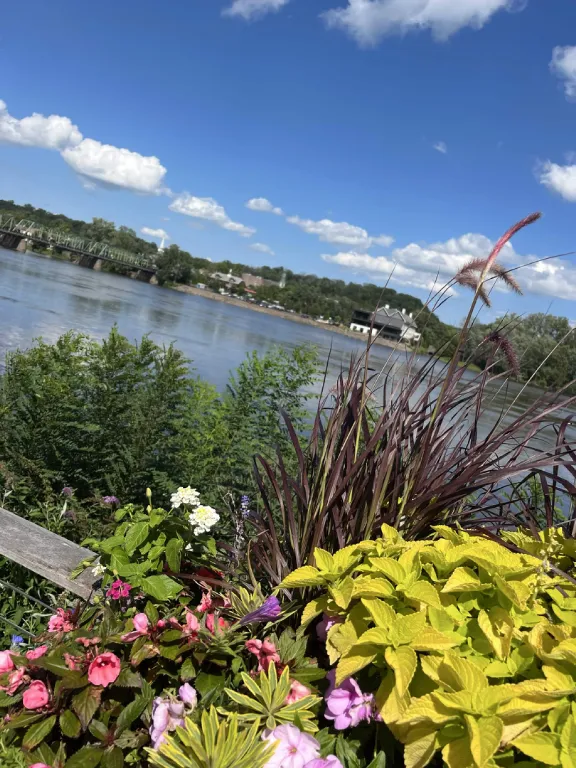
New Hope makes an easy jumping off point for the rest of Bucks County and the New Jersey side of the river. Lambertville, New Jersey sits directly across the Delaware, reachable on foot across the free pedestrian walkway on the New Hope-Lambertville Bridge, built in 1904 and still carrying as many as 14,000 pedestrian crossings on a single summer weekend day. It's worth the walk for the antique shops and gallery scene alone, and a painted line on the bridge marks the exact spot where Pennsylvania becomes New Jersey.
Other Art Colony and LGBTQ+ Friendly Towns
New Hope isn't the only Northeast town whose art scene and LGBTQ+ history grew out of the same roots. Provincetown followed a nearly identical script decades later on the other end of my travels, its own fishing industry giving way to painters and, eventually, one of the country's most established LGBTQ+ resort towns. Asbury Park, New Jersey tells a similar story on the Jersey Shore, a faded beach town that queer residents and artists rebuilt starting in the early 2000s. Different rivers and different coastlines, but the same pattern of art and acceptance breathing new life into a town that needed it.
Don't Miss the Next One
New essays and travel guides don't run on a schedule, they go up when there's actually something worth saying. Subscribe and I'll let you know the moment one does.
About 35 miles, roughly 50 minutes by car from Philadelphia's City Hall without traffic.
How far is New Hope from New York City?
About 75 miles, roughly 1 hour 30 minutes by car from Times Square without traffic.
Can you walk from New Hope to Lambertville?
Yes. The New Hope-Lambertville Bridge, built in 1904, carries a free pedestrian walkway across the Delaware River connecting the two towns, and a painted line on the bridge marks the Pennsylvania and New Jersey state line.
Do you need a car in New Hope?
Not once you're in town. Main Street and the riverfront are entirely walkable, and the pedestrian bridge gets you to Lambertville, New Jersey without a car.
Is New Hope dog friendly?
Yes, many restaurant patios and shops along Main Street welcome leashed dogs, though it's worth calling ahead to specific restaurants to confirm current policy.
What is the best time to visit New Hope?
Spring and fall bring milder weather and full restaurant patios, summer keeps Main Street at its busiest, and December draws visitors for Peddler's Village and the town's own Christmas lights, though many prefer a quieter winter visit for the historic inns and river views without the crowds.