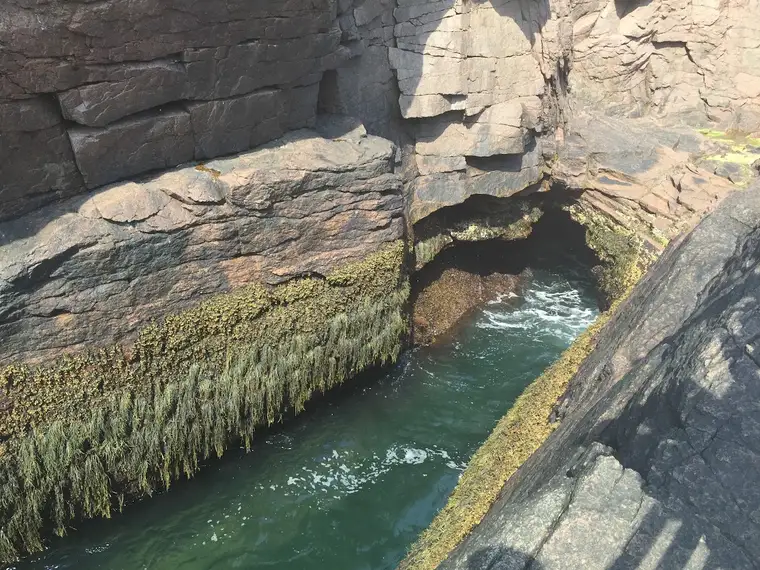
Thunder Hole on a middling swell. On the right rising tide a wave slams into the slot, traps the air, and blows spray up over the rail with a bang you feel in your chest. This was a calm afternoon and it still soaked the front row.
A small town at the edge of Acadia, the only national park in the Northeast. Granite headlands, a mountain you can watch the sunrise from before anyone else in the country, and more lobster than is strictly sensible.
Last Updated: September 1, 2026
Bar Harbor sits at the far end of Mount Desert Island, connected to the mainland by one short bridge. However you come, the last hour is a two lane road through spruce woods. The times below are rough door to door.
Mount Desert Island got its European name from Samuel de Champlain, who ran his boat aground here in 1604 and wrote it down as the island of bare mountains. For most of the next 250 years it was a place people fished and cut timber. Then in the 1840s the painters showed up. Thomas Cole and the Hudson River School artists came to paint the cliffs, their canvases traveled south to New York and Boston, and by the 1860s a steamer was bringing summer visitors up to a fishing village called Bar Harbor.
The visitors kept coming and kept getting richer. By the 1880s Bar Harbor was mentioned in the same breath as Newport, and the shore around the town filled up with enormous houses that everyone politely called cottages. The families who built them were Rockefellers, Astors, Vanderbilts, Morgans, Fords, and Pulitzers. For about 60 years this was one of the addresses where the American rich spent their summers.
The cottage era ended in a single week. In October 1947, after a dry summer, a fire that started in a cranberry bog burned across the eastern half of the island for days. It took more than 17,000 acres, a big share of it inside the young national park, and it destroyed most of the grand houses along the shore. The permanent residents rebuilt their homes. The cottages mostly did not come back, and the land where they stood filled in with the motels and inns that serve the far larger crowd who come now for the park.
The park exists because a few of the summer people decided the island should not be carved up and sold. George Dorr, Charles Eliot of Harvard, and John D. Rockefeller Jr. spent years buying land and giving it away to the federal government. In 1916 it became the Sieur de Monts National Monument. In 1919 Congress upgraded it to Lafayette National Park, the first national park east of the Mississippi River. It was renamed Acadia in 1929. Dorr put 43 years and most of his own fortune into it and is fairly called the father of the park.
Rockefeller left the most visible mark. Between 1913 and 1940 he paid for and laid out 45 miles of crushed stone carriage roads, with hand cut granite bridges and wide graded curves, all of it closed to cars. He built them so he could travel the island the way he preferred, by horse and carriage, and they are still the best surface in the park for walking and cycling. You can also still hire a horse drawn carriage from Wildwood Stables and ride them the way they were meant to be used.
The Ocean Path runs about 2 miles along the cliffs from Sand Beach south to Otter Cliff, and it is the walk almost everyone does first. It is flat, it is mostly gravel, and the whole way it holds the edge between the spruce and a straight drop to the water. About halfway along is Thunder Hole.
Thunder Hole is a narrow slot in the rock with a small cave at the back of it. When a wave runs into the slot it traps a pocket of air, the air compresses and then blows out, and on the right swell it goes off with a bang and throws spray 40 feet up over the railing. It needs a rising tide and some weather offshore to really perform, so about two hours before high tide is the time to be there. It also needs respect. People have been pulled off those rocks by waves that came in bigger than the last one, and the park closes the lower platform when the surf is up.
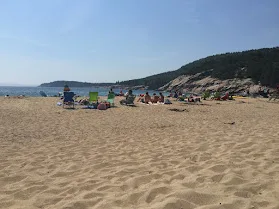
Sand Beach is a short crescent of sand tucked between two granite headlands, and it is the only real beach on this side of the island. It is a genuinely beautiful spot, backed by cliffs and Great Head, and in July it fills up early. Part of what makes the sand pale is that a lot of it is ground up shell rather than rock.
The water is the catch. The Gulf of Maine stays cold straight through summer, so even in August the ocean here is around 55 degrees. I have waded in to my knees, made a noise, and walked back out, and that is the standard experience. If you actually want to swim, drive over to Echo Lake on the west side, which is fresh water and warms up to something reasonable by August.
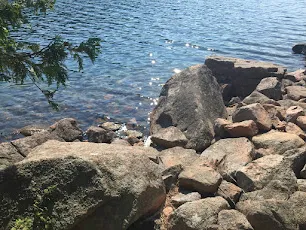
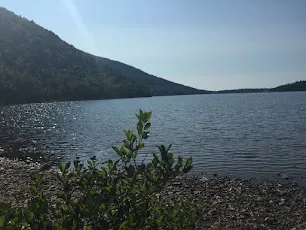
Jordan Pond is a long clear pond with two round hills, the Bubbles, standing at the far end of it. The trail around the whole pond is 3.3 miles and flat, though the west side turns into a run of rock hopping and log bridges laid over the boulders, which is either the fun part or the annoying part depending on your knees. The east side is easy and gives you the Bubbles the whole way.
At the south end is the Jordan Pond House, where people have been served tea and popovers on the lawn since the 1890s. The McIntire family ran the restaurant for 50 straight seasons before they retired in 1945. Rockefeller bought the property in 1928 and gave it to the Park Service in 1940. The original building burned in 1979 and the current one opened in 1982, and the popovers, big hollow shells of eggy pastry with butter and strawberry jam, have carried on the entire time. Get a reservation, sit outside, and look at the Bubbles while you eat.
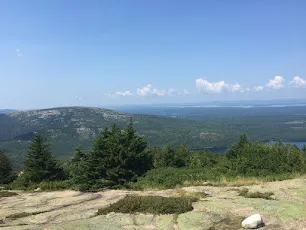
Cadillac Mountain is 1,530 feet, which sounds small until you learn it is the highest point on the whole eastern seaboard of the United States. A 3.5 mile road built in the 1920s runs to the bare granite top, where the view is open in every direction, over Frenchman Bay and its scatter of islands. From October 7 to March 6 the summit is the first place in the country the sun touches in the morning, and in season you need a timed vehicle reservation to drive up for sunrise because so many people want to.
Go back up at night. Acadia has some of the darkest skies left on the east coast, and on a clear moonless night the Milky Way stands up over the bay in a way most of us never get to see from home. The park runs a night sky festival every September built around exactly this. Bring a warm layer, let your eyes adjust for a good 20 minutes, and keep your phone in your pocket.
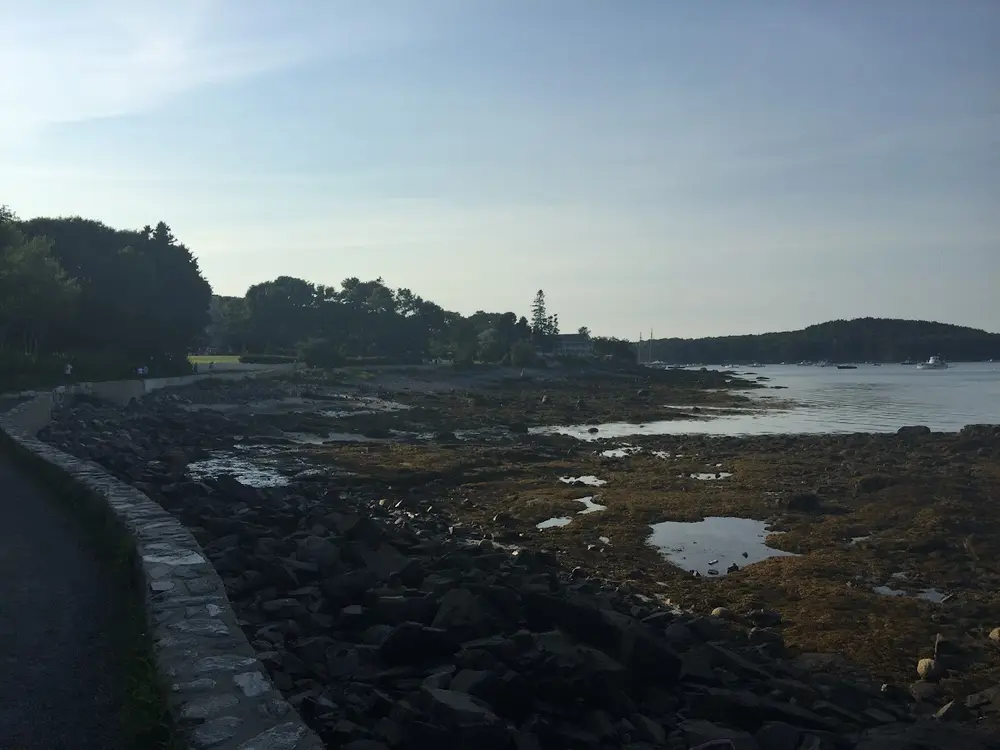
The town is named for a bar, a ridge of gravel that connects Bar Harbor to Bar Island and that the sea covers at high tide. For about 90 minutes on either side of low tide it dries out and you can walk straight across from the end of Bridge Street, poke around the island for a bit, and walk back. It is a fun, slightly strange thing to do. Check the tide chart first, because if you dawdle and the water comes back the next low tide is 9 hours away and the only way off is a boat.
On the other side of town, the Shore Path has run along the water since 1880. It is a public path on private land, kept up by the village association, and it takes you past a few of the surviving cottages and the site of a lot more that the fire took. It is a half mile, it is level, and it is the nicest short walk you can do straight from downtown.
September, without much of a contest. The days are still warm enough for the Ocean Path and the water is no colder than it was in August, the restaurants and the park roads are all still running, and the crowd drops noticeably once the school year starts. By the last week of the month the maples begin to turn and the island starts heading toward its real showpiece season.
July and August are the warmest and the busiest, and on a lot of those days a cruise ship or two is anchored in the bay and the sidewalks downtown are shoulder to shoulder by mid morning. Foliage peaks in the first half of October and is genuinely worth it. Winter shuts most of the town, though the park stays open and the quiet has its own appeal if you dress for it.
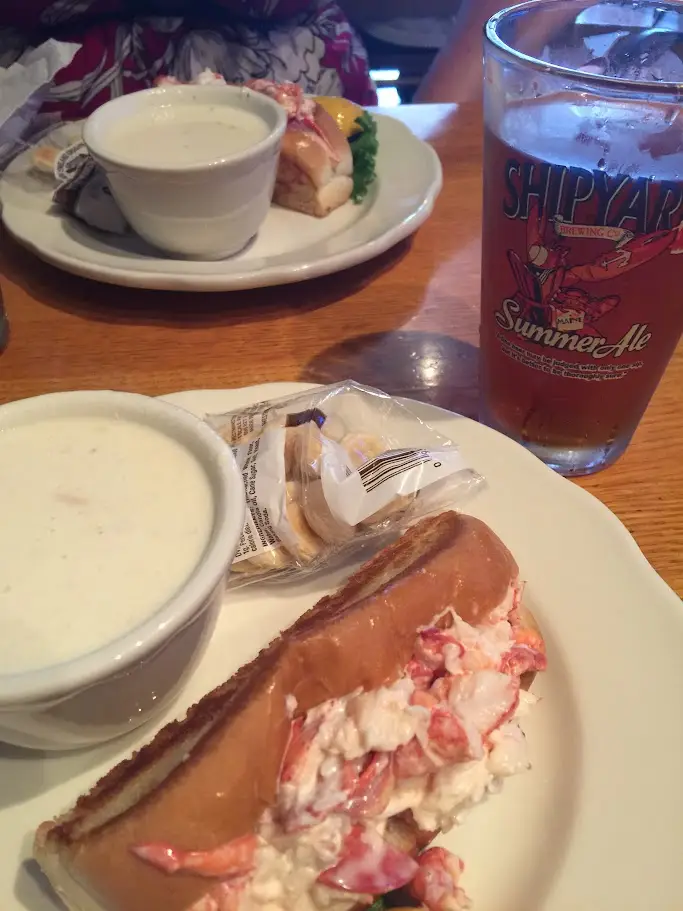
You are here to eat lobster, so start at a pound. Stewman's, right downtown on West Street, puts you at a table over the water with a whole steamed lobster, a bib, and a view of the harbor. Out on the quiet side of the island, Thurston's Lobster Pound in Bernard is the real article, picnic tables on a working dock with the boats coming and going underneath you. Both are worth the drive.
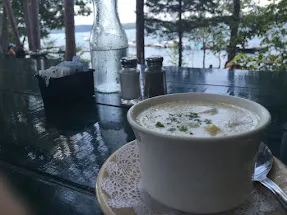
In town, Side Street Cafe on Rodick Street does the lobster roll I send people to, plus a lobster mac and cheese and a very good clam chowder, and it is loud and friendly and a little bit of a wait. For a drink, Atlantic Brewing has been making its Bar Harbor Blueberry Ale with wild Maine berries since 1993, and their taproom on Cottage Street is the easy call after a day on the rocks. And do not skip the popovers at the Jordan Pond House earlier in the day. They are the one truly famous thing to eat on this island and they have earned it.
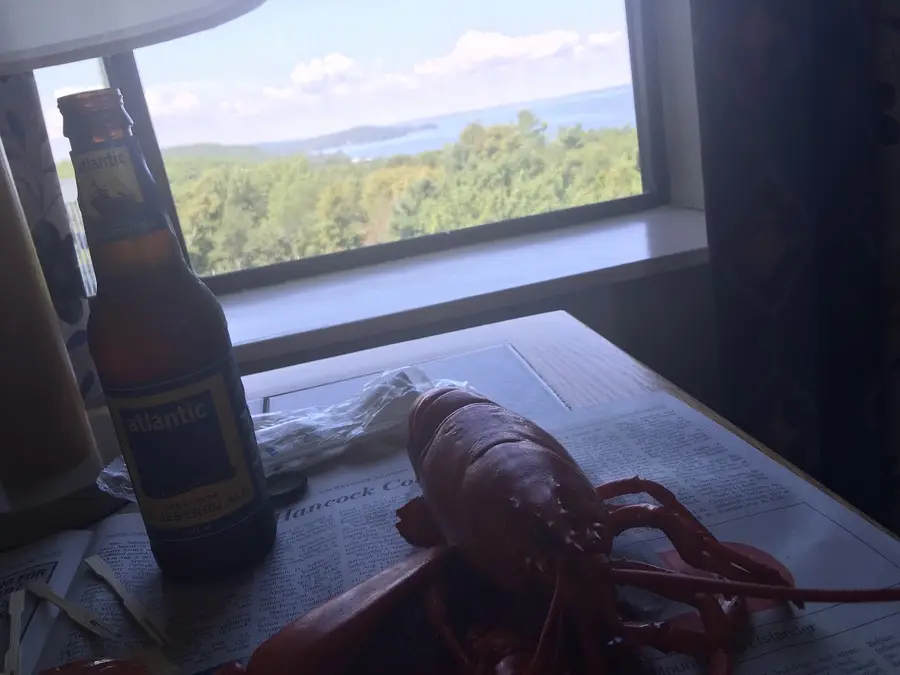
One more note. Buying a lobster from a pound, taking it back to wherever you are staying, spreading newspaper on the table, and eating it by a window with a bottle of the blueberry ale is a completely valid dinner and about half the price of the same lobster on a plate. I have done it more than once and regretted nothing.
Agamont Park is the little green at the top of the town pier, the oldest park in Bar Harbor, on the site of the town's first hotel, which of course burned down, in 1888. It looks straight out over Frenchman Bay, and on summer Wednesday evenings the chamber of commerce sets up a big screen there and runs a free movie at sunset. It is called the Seaside Cinema, there is free popcorn, and it runs from the middle of July into late August.
Bring a blanket and get there early for a spot on the grass. The best part is not the film. It is that the screen faces the water, so behind whatever you are watching the light is going down over the bay and the islands and the moored boats, and for a while you get both at once.
The bottom line: Bar Harbor is the doorway to the only national park in the Northeast, and it is one of the most beautiful places in the country, full stop. Walk the Ocean Path to Thunder Hole, do the Jordan Pond loop and stay for the popovers, catch a sunrise and then a moonless night on Cadillac, time the tide for Bar Island, and eat lobster off newspaper at least once. Come in September if you can. It does not come cheap, so plan the budget before you plan the trip.
The essentials, at a glance.
Thunder Hole on a middling swell. On the right rising tide a wave slams into the slot, traps the air, and blows spray up over the rail with a bang you feel in your chest. This was a calm afternoon and it still soaked the front row.
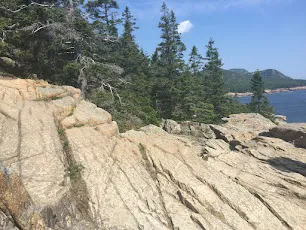
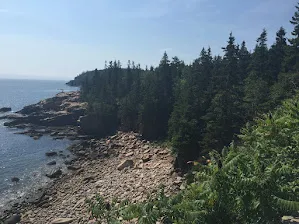
The pink granite and the spruce, somewhere along the Ocean Path. This is the exact coastline the Hudson River School painters carried back to New York in the 1850s, and it is the reason there is a national park here at all.
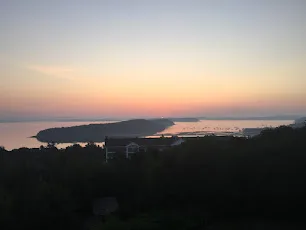
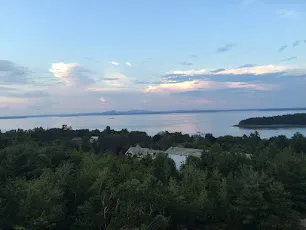
Sunset over Frenchman Bay from up the hill. The islands out there are the Porcupines, and the same view is the backdrop to the Wednesday night movies down in Agamont Park.
On my running list of Austen settings and their Northeast doubles, Bar Harbor is the stand in for Lyme Regis, and it is the one match on the list I feel most sure about. Lyme is where Persuasion goes to the sea. Austen sends the whole party down to walk the Cobb, the long stone breakwater, and it is on those steps that Louisa Musgrove insists on being caught jumping, is not caught, and falls. The seaside in that book is bracing and a little dangerous, the wind is always up, and the sea air is the thing that brings Anne Elliot back to herself. Acadia is that exact register. The Ocean Path holds the edge of a cliff, Thunder Hole has actually pulled people off the rocks, and a walk along that shore in a stiff wind does the same thing to your head that Austen clearly believed it did to hers.
The second thread is quieter and it is about carriages. In Austen a carriage is never just transport. It is rank, and it is freedom of movement, and half of Emma turns on who offers whom a ride and in what. Acadia is one of the only places in America built for that older way of getting around. Rockefeller laid out 45 miles of carriage roads here and kept the cars off them on purpose, and you can still climb into a horse drawn carriage at Wildwood Stables and ride the graded curves and the granite bridges at the speed the whole landscape was designed to be seen from. It is the closest thing I know of to actually traveling through an Austen novel.
Down the coast, York is the softer, easier version of the same idea, rocky points and small beaches with the Nubble Light just offshore, and an easy first stop if you are driving up from Boston. Further along, Old Orchard Beach trades the granite for 7 miles of flat sand and a pier with a carnival on it. Neither is Acadia, but together they make a good slow road north.
Bar Harbor was Newport with pine trees, and Newport, Rhode Island is where you can still walk through the cottages the fire did not spare here. On Martha's Vineyard, Oak Bluffs is the other island resort that a wave of summer money built and then mostly left alone, gingerbread cottages instead of granite mansions.
Don't Miss the Next One
New essays and travel guides don't run on a schedule, they go up when there's actually something worth saying. Subscribe and I'll let you know the moment one does.
Subscribe to the Newsletter →Bar Harbor is at the end of Route 3 on Mount Desert Island, off the central coast of Maine. It is roughly 3 hours north of Portland and about 5 hours from Boston by car. The closest airport with regular flights is Bangor, about an hour to the west, and the small Hancock County airport in Trenton is right at the bridge to the island. There is no passenger train to this part of Maine.
In summer and early fall you can manage without one. The free Island Explorer bus runs from late June until the middle of October and links Bar Harbor with Sand Beach, Jordan Pond, the campgrounds, and many trailheads. The Cadillac Summit Road is not on a bus route and needs its own vehicle reservation. Outside the Island Explorer season you will want a car.
As of 2026 an Acadia entrance pass is 35 dollars per vehicle and covers 7 days, or 20 dollars per person if you arrive on foot or by bike. An annual Acadia pass is 70 dollars. Driving the Cadillac Summit Road also requires a separate vehicle reservation, which costs 6 dollars and is booked ahead on Recreation.gov from late May into October.
The gravel bar that gives Bar Harbor its name is exposed for about 90 minutes on either side of low tide, so you get a window of roughly 3 hours to walk across and back. Check a tide chart before you set out. If you miss the window the next low tide is about 9 hours away and you would need to call a boat.
September is the sweet spot. The weather still holds, the town and the park stay fully open, the crowds thin out after Labor Day, and the foliage starts turning by the end of the month. July and August are the warmest months but also the busiest, with cruise ships anchored in Frenchman Bay on many days. Winter is very quiet and most of the town closes.
Not really. The ocean at Sand Beach stays around 55 degrees even in August because the Gulf of Maine is cold all summer. Most people wade in to their knees and come straight back out. For an actual swim, Echo Lake on the west side of Mount Desert Island is fresh water and warms up through the season.
Pin this guide for your next trip to Bar Harbor!
Pin ItNot seeing a pin ready to save? Follow along for more here: Emma Shorebreak's Northeast Travel board on Pinterest
More of Acadia, and wherever the road goes next, over on Instagram.
Follow @emmashorebreak →