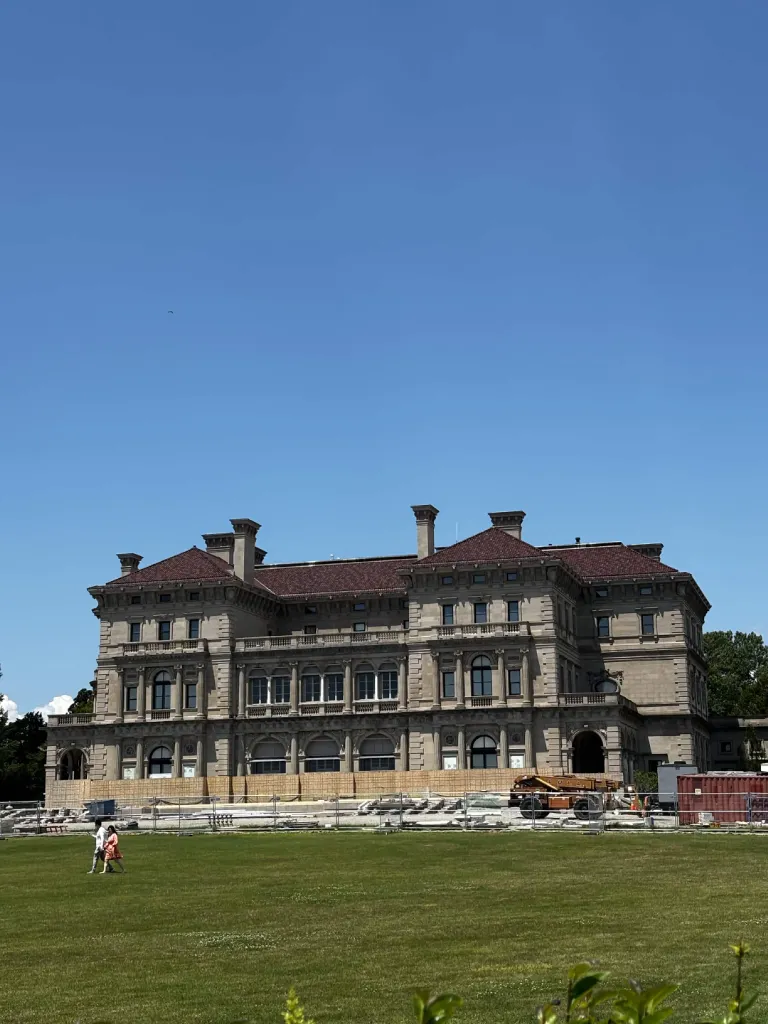
The Cliff Walk, the mansions, and a very Gilded Age sort of envy.
Last Updated: August 28, 2026
Getting to Newport
Approximate driving distance and time via major highways, for planning purposes only.
From Philadelphia, PA (City Hall)
4 hr 45 min
~280 miles
From New York City, NY (Times Square)
3 hr 15 min
~180 miles
From Boston, MA (Faneuil Hall)
1 hr 30 min
~75 miles
A Short History of Newport
Newport didn't become one of America's great resort towns by accident, or gradually. It was settled in 1639 and spent its first two centuries as a serious colonial port, one of the busiest in the northern colonies before the Revolution knocked it flat. The version people picture now, the one with the marble, arrived fast at the end of the 1800s. Industrial fortunes, the Vanderbilts, the Astors, and a growing roster of families with no old money pedigree and a great deal more cash than the families who did, needed somewhere to spend a summer proving they'd arrived. Newport, with its coastline and its leftover colonial prestige, became the answer. By the 1870s the comparatively modest summer houses were giving way to what their owners insisted on calling "cottages," a word doing an enormous amount of ironic work for buildings the size of small European palaces.
The whole system had rules, most of them enforced by Caroline Astor, "the" Mrs. Astor, who spent years deciding exactly who counted as real society and who was merely rich. The Vanderbilts spent a full decade trying to force their way into her good graces before she finally relented. It's a genuinely petty, genuinely fascinating multi generational social war that reads less like history and more like the plot of a very expensive soap opera, and it plays out in the houses you can still walk through today.
The Newport Mansions
The Breakers, built for Cornelius Vanderbilt II and completed in 1895, is the largest of them and the one most people picture when they think of Newport at all. Seventy rooms built to look effortless, which is its own kind of joke given what it actually cost.
Marble House, built for his brother William K. Vanderbilt and his wife Alva, used more marble than several actual European palaces. It was also the house where Alva planned her daughter Consuelo's marriage into the British aristocracy with the same care she'd apply to any other acquisition. It's worth the stop specifically for that story, an American fortune deliberately buying its way into the exact kind of English land owning title Jane Austen spent her novels scrutinizing, a full century after Austen was writing and an ocean away.
The Elms runs a below stairs tour built around the household staff who actually kept these places running, worth doing if you want the version of Newport that isn't just the family upstairs.
Rosecliff, built for the silver heiress Theresa Fair Oelrichs, has since become a familiar face on screen. Its ballroom hosted the climactic ball in the first season of HBO's The Gilded Age, and its white facade doubles as Mrs. Chamberlain's Manhattan house on the same show.
The Cliff Walk
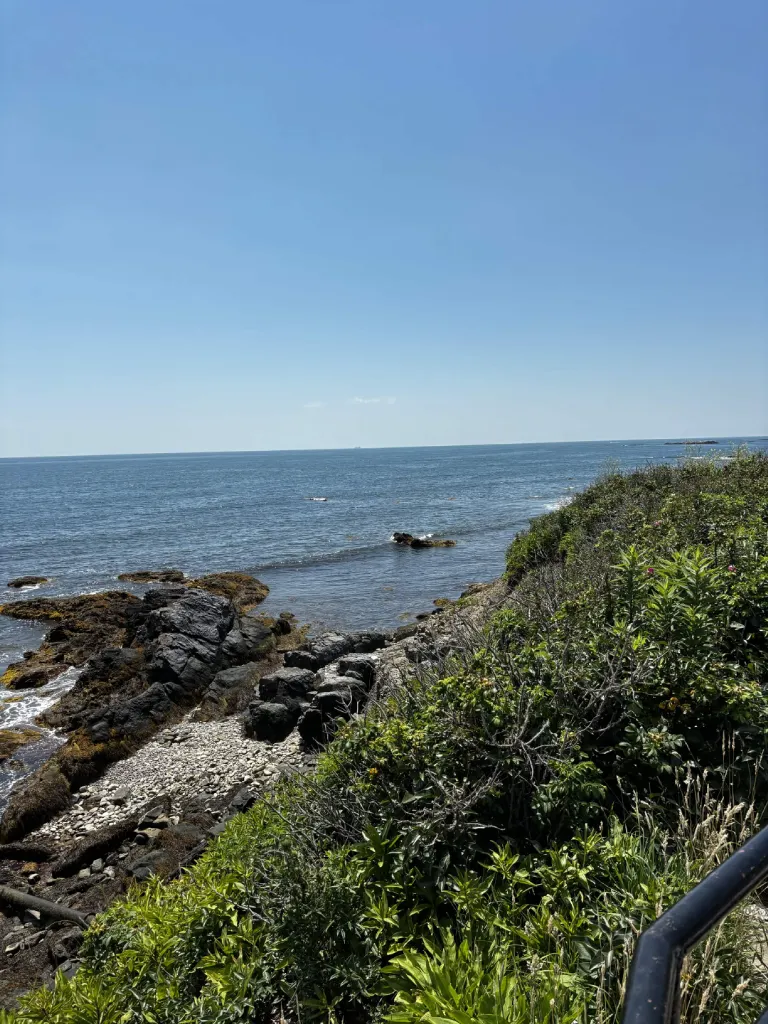
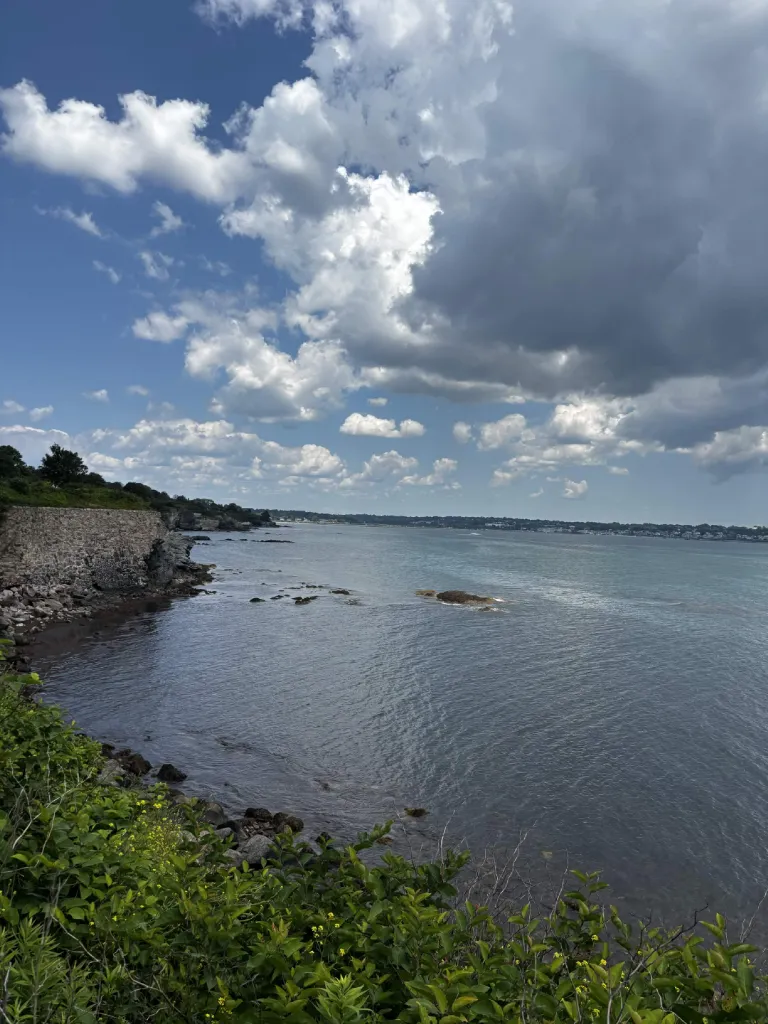
The Cliff Walk is a 3.5 mile public trail running along Newport's eastern shoreline, from Easton's Beach to Bailey's Beach. It started as a deer trail, then a Narragansett route, then a stretch colonial settlers used to comb the shore for shipwreck salvage, before the Gilded Age families building along the cliffs formalized it into what exists today. It's been a National Recreation Trail since 1975, the first one designated in New England, and it stays public only because Rhode Island's 1843 constitution protected shoreline rights against exactly the kind of private ownership the mansion families would otherwise have preferred.
Most of the walk is an easy paved stroll with real ocean views and a close look at the mansions from the water side. The southern stretch gets genuinely rocky and uneven, so wear good shoes rather than sandals if you're doing the whole thing. I've turned back at the rough part more than once and never felt I'd missed much.
One detail worth knowing: parts of the Cliff Walk doubled as an informal social space for the mansions' own household staff, a place for music and dancing on their own time, a small and mostly unrecorded parallel society living along the same cliffs as the families they worked for.
The Newport Casino and the First US Tennis Championship
The Newport Casino, a shingle style social club built in 1880 for the newspaper magnate James Gordon Bennett Jr., hosted the first US National Lawn Tennis Championship the following summer. Twenty five competitors, a band playing through the matches, and a crowd that treated the whole thing as much as a society occasion as a sporting one. It stayed the site of the national championship for more than three decades, from 1881 to 1914, before the tournament outgrew Newport and moved to what eventually became the US Open. The Casino now houses the International Tennis Hall of Fame, and it's worth a visit even if you have no particular interest in tennis history. The building itself is one of the finest surviving examples of the era's architecture, gold trimmed theater ceiling included.
Where to Eat
Rhode Island named calamari its official state appetizer in 2014, usually served with sliced hot peppers, and Newport takes that seriously enough that you'll find a version on most menus near the water. For chowder, the Black Pearl on Bannister's Wharf has been the standard since 1967 and guards its recipe accordingly. Flo's Clam Shack, which traces back to a 1936 stand near Island Park, is the no frills option, a paper tray of fried clams eaten outside with your feet more or less in the harbor. That last one is my order every time.
Best Time to Visit Newport
Summer is Newport at full volume, sailboats everywhere, the mansions busy, and the Newport Folk Festival in late July and the Newport Jazz Festival in early August filling Fort Adams. If you want that energy, June through September delivers it. I go in late September and refuse to be argued out of it, the water's still swimmable, the foliage starts turning along the Cliff Walk, and you can get a table without a reservation made three weeks out. December has its own case, when the Breakers, Marble House, and the Elms are decorated and open for holiday tours. Deep winter is quiet to the point of shuttered, pretty but limited.
The Bottom Line
The bottom line: Newport is a walk along a cliff with the Atlantic on one side and a hundred years of American money on the other. Do the mansions, do the Cliff Walk, eat the fried clams, and you've had the town at its best.
Quick Facts
The essentials, at a glance.
Settled
1639
Cliff Walk
3.5 mi
Easton's Beach to Bailey's Beach
The Breakers
70 rooms
Completed 1895
Known For
Gilded Age
Mansions and the Cliff Walk
Newport in Pictures
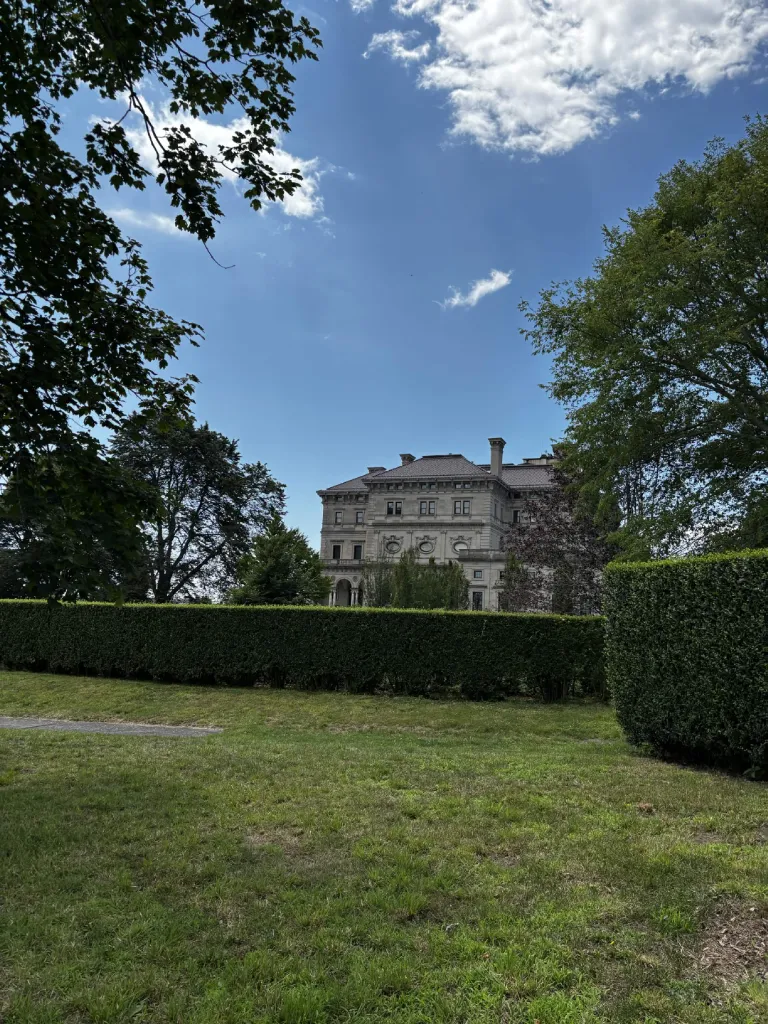
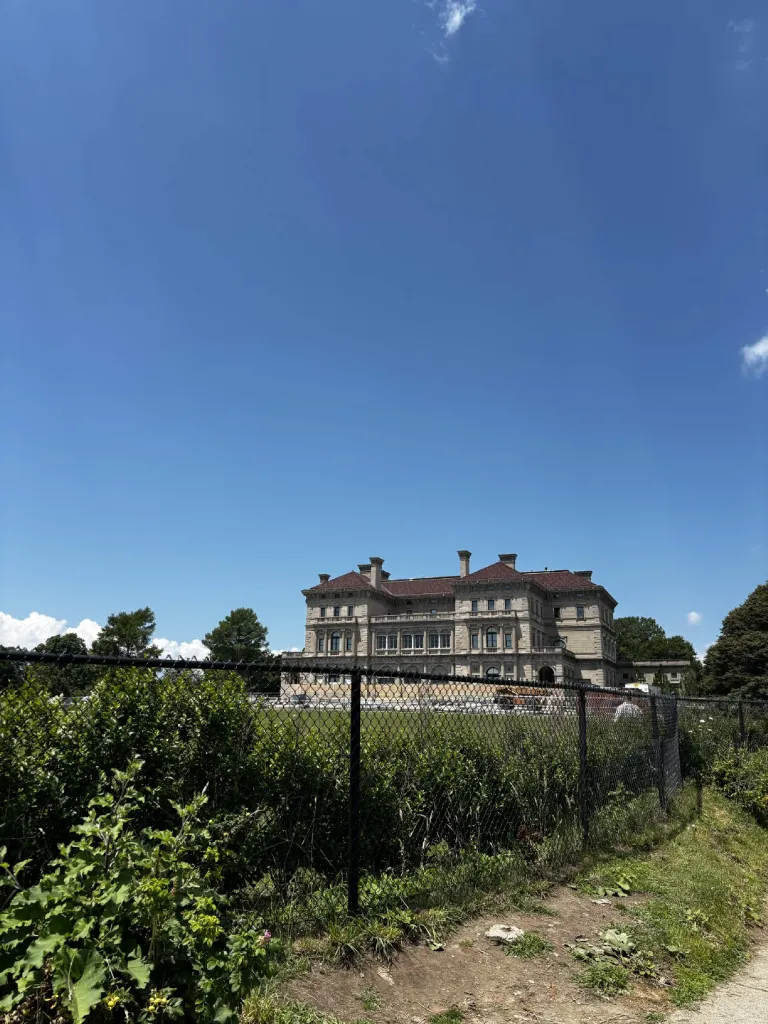
There are few walks in New England so thoroughly designed to induce envy as the Newport Cliff Walk, a 3.5 mile promenade where the Atlantic performs on one side and the Gilded Age preens on the other. I made the full circuit past The Breakers and Marble House, those cottages of modest ambition built by families with immodest fortunes, and concluded that a woman may admire great wealth without particularly wishing to dust it.
The northern half of the Cliff Walk is the civilized half, paved and level, the kind of stroll you can do in whatever you wore to lunch. It's also where the mansion lawns come right up to the path, so you spend the walk looking sideways at other people's houses. Jane Austen would have understood the impulse completely.
The Breakers is the one everyone photographs, and for once the crowd is right. Seventy rooms, built for Cornelius Vanderbilt II and finished in 1895, all of it arranged to look like it cost the family no thought at all. The audio tour is genuinely good on how much thought it actually took.
Bellevue Avenue runs a straight line of these places, one after another, each one built partly to be admired and partly to make the neighbors feel their own house was a little small. Marble House is the one to tour if you only do one besides The Breakers, mostly for the Consuelo Vanderbilt story attached to it.
The Newport Casino held the first US National tennis championship in 1881 and kept it until 1914. It's the International Tennis Hall of Fame now, and even if you don't care about tennis, the shingle style building around the grass courts is one of the best rooms in town, gold theater ceiling and all.
Rhode Island made calamari its official state appetizer in 2014, tossed with sliced hot peppers, and it turns up on nearly every menu near the Newport waterfront. It is a very correct thing to order while looking at boats you cannot afford.
Newport isn't Regency England by any measure. Wrong country, wrong century, entirely different money. The two worlds still brush up against each other directly in one place. Alva Vanderbilt raised her daughter Consuelo under a team of governesses working out of both Marble House and the family's house in New York, drilling her in French, music, and deportment with one stated goal, marrying her into the English aristocracy. It's the same institution, the same list of accomplishments, and the same underlying logic Jane Austen spent her whole career writing about, deployed a century later by a family with an American fortune and a very specific European target. It worked. Consuelo married the Duke of Marlborough in 1895, in a wedding her mother had been arranging since she was a child.
There's a second thread too, and it's the one that actually earns Newport a place on this site. Austen's last, unfinished novel, Sanditon, is about a sleepy shore village being deliberately built up into a fashionable resort by men who believe sea air and a little speculation can turn any stretch of coast into a destination. She died before deciding whether the scheme would succeed or embarrass everyone involved. Newport is roughly what happens when it succeeds. A colonial port with old prestige and not much industry left, remade in a few decades into the place an entire class went to be seen, is precisely the transformation Austen was sketching in those unfinished pages, ambitious, a little theatrical, and finally about a place deciding who it wanted to be.
Continue Exploring the New England Coast
Newport sits at the bottom of a long stretch of New England coastline worth working through. Nantucket, out past the Cape by ferry, is the other great whaling money island, cobblestones and grey shingle where Newport went in for marble. Plymouth, up the coast in Massachusetts, trades the Gilded Age entirely for the colonial story, the Rock, the Mayflower, and the 1620 landing.
More Gilded Age in the Northeast
The families who built along Bellevue Avenue didn't live in Newport year round. They wintered in Manhattan, in townhouses off Fifth Avenue, and the same social rules Caroline Astor enforced in Newport ran the calendar there too. If the mansions leave you wanting the city end of the same story, that's where it picks up.
Don't Miss the Next One
New essays and travel guides don't run on a schedule, they go up when there's actually something worth saying. Subscribe and I'll let you know the moment one does.
About 75 miles by car, roughly 1 hour 30 minutes without traffic. From New York City it is about 180 miles and 3 hours 15 minutes, and from Philadelphia about 280 miles and 4 hours 45 minutes.
How long is the Newport Cliff Walk?
3.5 miles one way, running along Newport's eastern shore between Easton's Beach and Bailey's Beach. The northern half is paved and easy, and the southern end turns rocky and uneven, so wear real shoes if you plan to walk the whole thing.
Is the Cliff Walk free?
Yes. The Cliff Walk is a public right of way and has been a National Recreation Trail since 1975. The mansions it passes charge admission, but the walk itself costs nothing and stays open year round.
Do you need a car in Newport?
You need one to get to Newport, and it helps for reaching the mansions along Bellevue Avenue. Downtown Newport and the wharves are walkable once you are there, and a seasonal trolley covers the main mansion route.
What is the best time to visit Newport?
June through September for full summer, including the Newport Folk Festival and Newport Jazz Festival at Fort Adams. Late September and October trade the crowds for foliage and easier restaurant tables, and the mansions run holiday tours through December.
Which Newport mansion should you tour first?
The Breakers is the largest and the usual first visit. Marble House has the better single story, since Alva Vanderbilt planned her daughter Consuelo's marriage into the British aristocracy there, and The Elms runs a servants' life tour that shows how these houses actually ran.