Who Was the Governess? Education, Status, and the Woman Who Shaped Austen's Heroines
By Emma · August 29, 2026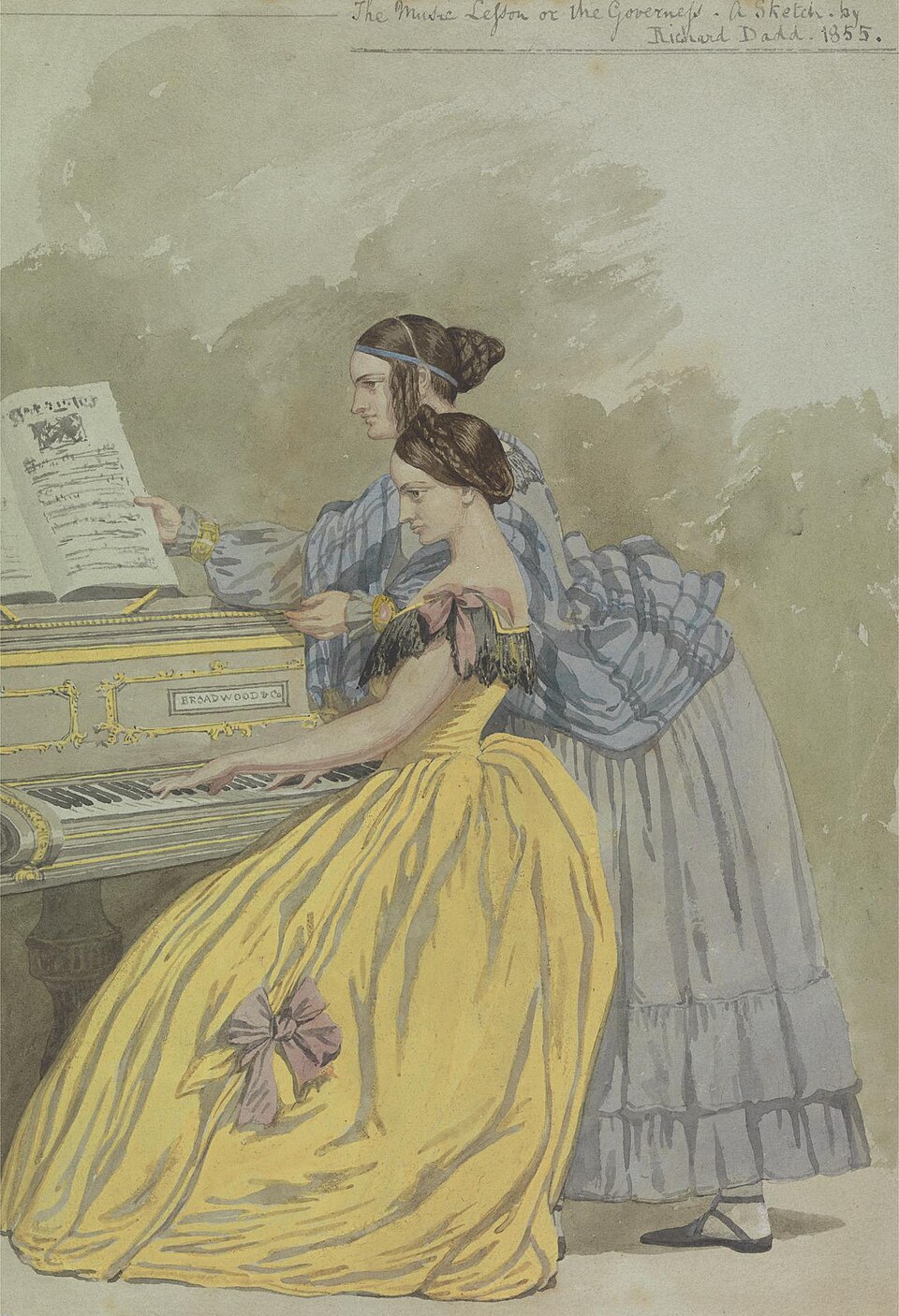
Every one of Jane Austen's marriageable young women was, at some point, somebody's pupil. Before the balls and the proposals and the letters, there was a schoolroom, and in that schoolroom there was very often a governess, an odd, uncomfortable, largely invisible figure whose job was to turn a girl of good family into a woman society would actually receive. This essay is about her, who she was, what she was actually responsible for teaching, and why the five accomplishments covered across The Accomplished Young Lady existed as a curriculum in the first place, rather than as a random collection of Regency trivia.
A Woman Belonging to Neither Room
The governess occupied a genuinely strange position in a Regency household, and Austen understood exactly how strange it was. She was gentry-born, educated, well-spoken, in every social marker except income indistinguishable from the family she worked for. And yet she worked for wages, ate at irregular tables, and belonged fully neither upstairs with the family nor downstairs with the servants. She was, in the bluntest terms, a lady doing a job that erased the thing that made her a lady in the first place, independence from the necessity of earning money.
Austen wrote this precariousness directly into her fiction more than once. Jane Fairfax in Emma faces the governess trade as something close to a horror, a fate the novel treats with real dread and not gentle comedy, “something like the slave-trade,” Jane herself calls it, in one of the novel's sharpest, least comfortable lines. Miss Taylor, before she becomes Mrs. Weston, spent 16 years as Emma's governess and companion, occupying exactly the in-between status this essay is describing, close enough to be beloved, dependent enough that her eventual marriage functions as a genuine rescue. I've written elsewhere about how completely that specific role, trusted confidante more than authority figure, got carried forward into an unlikely modern echo. Dionne's function in Clueless maps onto Miss Taylor far more precisely than the more obvious Miss Geist comparison does, which says something real about how enduring this particular social position turned out to be, worth a whole story two centuries after Austen first wrote it.
She was still circling the same figure at the very end of her life. Sanditon, the novel Austen was writing when she died in 1817, hands us Mrs. Griffiths, who keeps a small establishment for 3 or 4 girls and lives on what their families pay her, with the wealthy and closely watched Miss Lambe among her charges. More than 20 years of Austen's working life, and the woman paid to finish somebody else's daughter is right there in the earliest work and the last.
What She Was Actually Responsible For
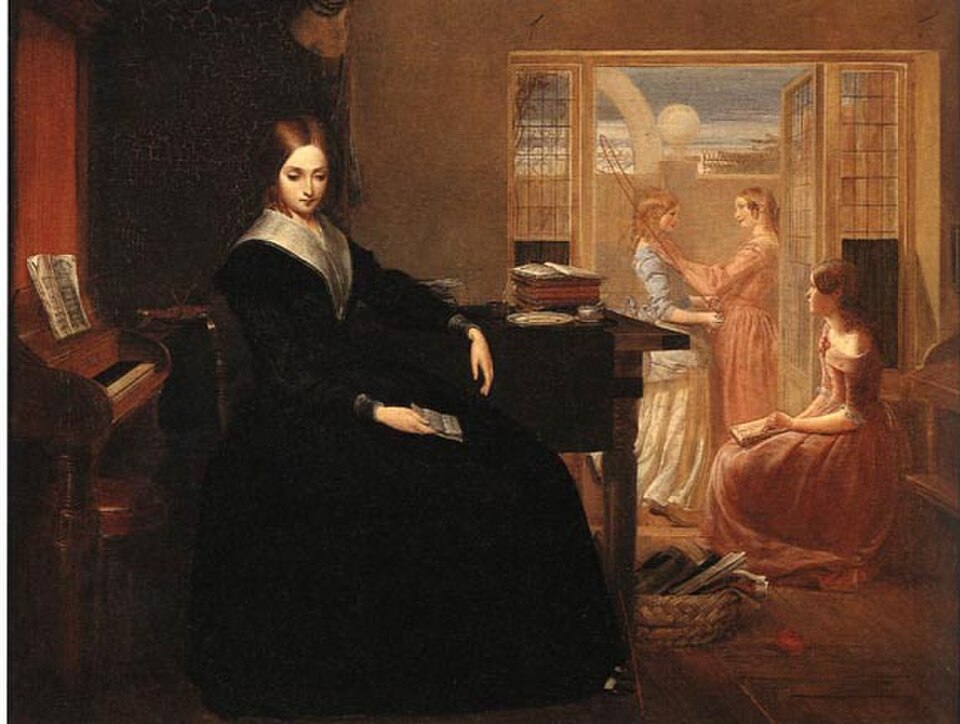
The governess's job wasn't sentimental. It was a defined, high-stakes curriculum, because a young woman's entire future depended on what she could demonstrate by the time she entered society. A room full of near-strangers had almost nothing else to judge her by beyond a single evening's worth of conduct, so every piece of that conduct had to be taught, drilled, and correct.
The five pillars this site's Accomplished Young Lady curriculum is built around come directly from the standard a governess actually had to produce, most memorably summarized by Caroline Bingley's own list in Pride and Prejudice. Each one was solving a different, specific problem.
Etiquette and deportment came first because it was load-bearing for everything else. A young woman who fumbled a curtsy or misjudged a form of address had announced something about her upbringing before she'd said a single interesting word. It's the skill Austen treats as most damning to get wrong, and least interesting to write about when it's done correctly, which tells you something about how invisible good manners were meant to be.
Dress and presentation mattered because a woman changed clothes 3 or 4 times a day, and every change carried its own set of rules, morning, promenade, evening, each with a correct answer a governess had to drill until it became instinct instead of a calculation made in front of company.
Dancing doubled as courtship's only sanctioned physical contact, which is exactly why Austen stages so much of her romantic tension on a ballroom floor. A governess teaching steps was also teaching a young woman how to be watched at close range without flinching.
Speech and conversation was where wit lived, but wit unsupervised was dangerous, and Elizabeth Bennet spends much of Pride and Prejudice learning exactly this lesson the hard way. A governess's job was to sharpen the instrument without letting a girl cut herself with it in public.
French was less about actual fluency than about a very specific kind of restraint, knowing precisely which handful of phrases signaled real breeding, and understanding that reaching for more than that gave away exactly the opposite impression it was meant to create.
And finally, air and manner, the hardest thing on the list to actually teach, because it wasn't a skill so much as a decision, whether a room could rattle you, and whether it could tell.
None of these were optional extras. A governess who failed to instill them had failed at the actual job, because the girl in her charge would be judged, quickly and often unforgivingly, on exactly these grounds the moment she entered a real drawing room.
An Institution That Outlived the Regency
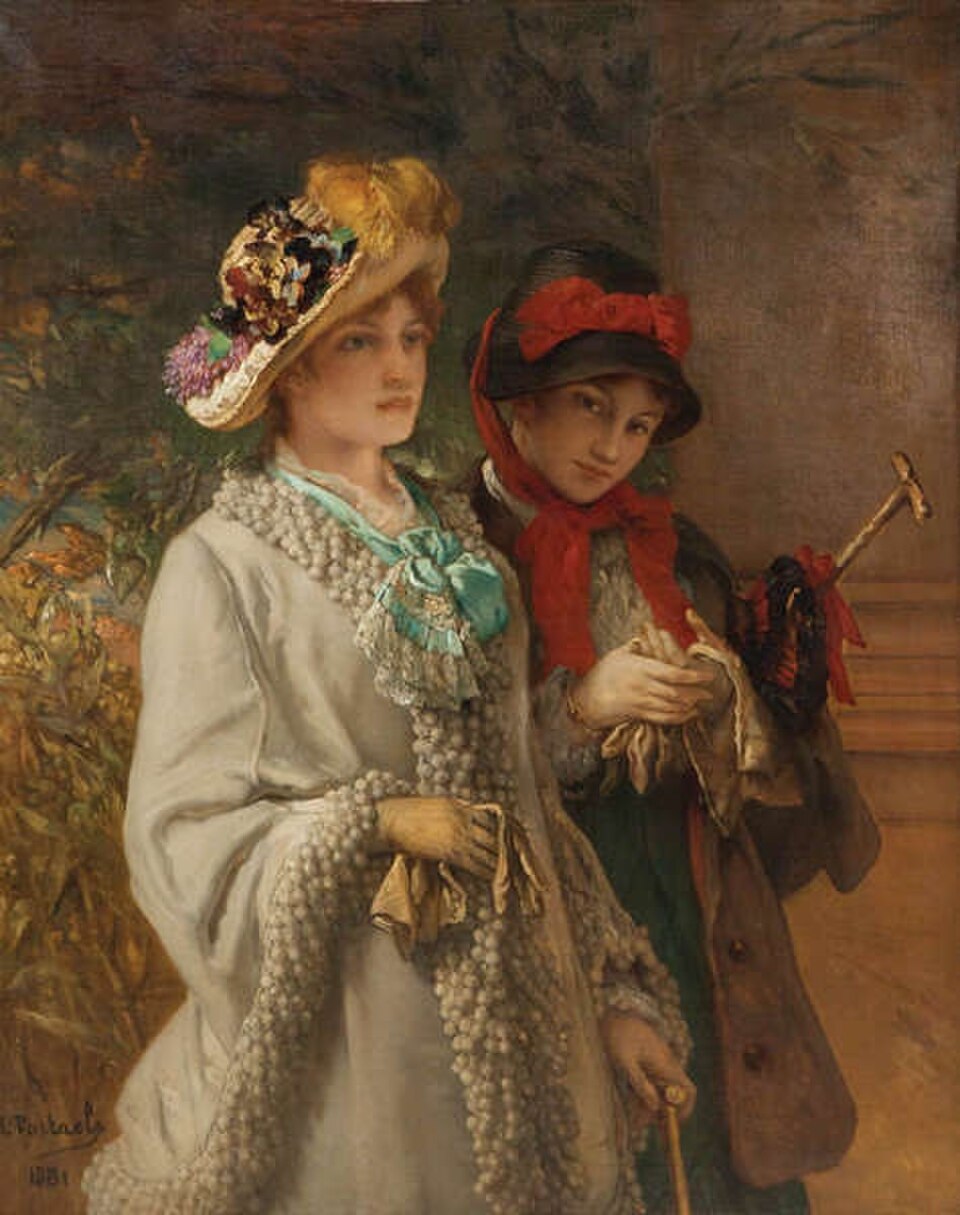
The governess didn't disappear with the end of Austen's era, and she didn't stay in England either. Decades later, in Gilded Age New York and Newport, Alva Vanderbilt raised her daughter Consuelo under the management of an entire team of governesses, drilling her in French and music with a specific, deliberate goal in mind, preparing her to be a European hostess. It worked, in the narrowest sense, and Consuelo was married off to the Duke of Marlborough in 1895, an American heiress trained from childhood into exactly the kind of accomplished-woman curriculum this essay has been describing, deployed a full century later, on the other side of the Atlantic, in service of landing precisely the sort of aristocratic match Austen's own characters spent whole novels maneuvering toward.
You can watch the same job travel across the ocean in fiction too. In Little Women, which Louisa May Alcott wrote at Orchard House in Concord, Massachusetts, Meg March spends her days as a governess to the King children and hates nearly every minute of it, and Jo takes a post as a nursery governess in a New York boarding house so she can write at night. Alcott is doing on purpose what Austen did by instinct, using the governess to mark the exact line between a genteel family and a poor one. For an educated woman whose father had lost the money, teaching someone else's children in someone else's house was often the only respectable wage on offer, and both writers knew it.
The most famous governess story of the twentieth century runs on the same machinery. In 1926 the Nonnberg Abbey in Salzburg lent out a novice named Maria Kutschera to tutor one of the widowed Georg von Trapp's seven children, a daughter also named Maria who was too ill with scarlet fever for school. She was meant to stay under a year and then take her vows. Instead the Baron proposed, she married him in 1927, by her own later account more for the children than for him, and the household eventually left Austria and rebuilt itself on a hillside in Vermont, which I wrote about in my Stowe travel guide. Take away the Alps and the songs and The Sound of Music is the governess plot exactly as Austen's readers would have known it, an educated woman with no money of her own, brought in to raise another woman's children, whose marriage to the man of the house is both a romance and a rescue.
The irony runs both directions. American commentators of the era were often openly dismissive of the British governess system by comparison, arguing English girls raised by “a more or less incompetent governess” came out less capable than American heiresses tutored by dedicated professors. Whether or not that critique was fair, it confirms the larger point, that the accomplishments Austen's heroines were drilled in didn't stay confined to Hampshire drawing rooms, or even to the nineteenth century. They resurfaced, largely intact, wherever a family had a daughter, a fortune, and an eye on marrying well.
Why This Curriculum Still Holds Up
It would be easy to treat all of this as costume-drama trivia, five old-fashioned skills nobody needs anymore. I don't think that's quite right. Every one of these pillars was really teaching the same underlying thing, how to be read correctly by a room that has very little else to go on. That's a strange, specific kind of pressure, and Austen spent her whole career writing heroines who either mastered it, like Elizabeth Bennet learning to control her wit, or were quietly punished by a world that judged them on it anyway, like Fanny Price, whose shrinking manner is both her defining flaw and, eventually, her defense.
If you want to actually sit the examination instead of just reading about it, the full curriculum is playable now, one accomplishment at a time, over at The Accomplished Young Lady. The governess who built it is, admittedly, considerably more exacting than the one in your own imagination is likely to be.
Questions People Ask About the Regency Governess
What did a Regency governess actually teach?
A private governess handled a girl's whole education until she came out into society, roughly ages 6 to 17. That meant reading, writing, French and often Italian, music, drawing, plain and fancy needlework, some history and geography and use of the globes, and, under all of it, manners, carriage, and conversation. The academic subjects mattered less than the social finish. A girl who could not play, speak, and move correctly in company had, in the period's terms, been failed by whoever raised her.
Did a governess live with the family?
Almost always. A resident governess lived in the house, usually in a room near the schoolroom or nursery, and was on duty from breakfast to bedtime. She dined sometimes with the family and sometimes alone, was too well born to sit with the servants and too poor to be a guest, and had almost no private life of her own. Jane Fairfax's dread of the profession in Emma is about exactly that loss of independence.
How much was a governess paid?
Not much. A Regency governess might earn between 20 and 100 pounds a year plus board, with 30 to 40 pounds common, at a time when a gentleman's household needed several hundred a year to live decently. The job offered security and respectability, not advancement, and a governess who lost her post or her health had very little to fall back on.
Which Jane Austen characters were governesses?
Miss Taylor, later Mrs. Weston, was Emma Woodhouse's governess for 16 years. Jane Fairfax, in the same novel, is being pushed toward the profession and openly dreads it. In Sanditon, Mrs. Griffiths keeps a small establishment for a few young ladies, including the heiress Miss Lambe. Meg and Jo March in Little Women both take governess posts, a generation later and on the other side of the Atlantic.
What is the difference between a governess and a finishing school?
A finishing school, or seminary for young ladies, taught the same accomplishments to a group of girls for a fee, away from home. A governess did the same work one on one, in the family's own house. Wealthier or more rural families kept a governess, while others sent daughters out to a school for a year or two of polish. Both aimed at the same result, a young woman ready to be looked at and judged by strangers.
Sit the Examination Yourself
Every accomplishment on the governess's list is a lesson you can play, a slide-deck lecture from the governess, a scenario test, and a report card at the end. Start with whichever one you'd fail first.
Enter The Accomplished Young Lady →Don't Miss the Next One
New essays and travel guides don't run on a schedule, they go up when there's actually something worth saying. Subscribe and I'll let you know the moment one does.
Subscribe to the Newsletter →