An island that stays grey and quiet most of the year, then turns entirely yellow for the last weekend of April.
Last Updated: August 28, 2026
Getting to Nantucket
Nantucket sits 30 miles out with no bridge, so every route runs through the ferry terminal in Hyannis. Times below combine the highway drive to Hyannis with the roughly one hour high speed crossing. Book the ferry ahead in season.
From Philadelphia, PA (City Hall)
7 hr
~340 mi drive to Hyannis, then a 1 hr ferry
From New York City, NY (Times Square)
5 hr 30 min
~260 mi drive to Hyannis, then a 1 hr ferry
From Boston, MA (Faneuil Hall)
2 hr 30 min
~70 mi drive to Hyannis, then a 1 hr ferry
A Short History of Nantucket
I started my mid-20s loyal to Martha's Vineyard, so it took me an embarrassingly long time to spend a proper weekend on Nantucket. The two islands sit within sight of the same water and could not feel less alike. Nantucket is smaller, greyer, and more of a single piece, 30 miles out to sea with nearly every downtown building wrapped in the same weathered cedar shingle. English settlers led by Tristram Coffin bought the island from Thomas Mayhew in 1659, and within a century Nantucket had become the whaling capital of the world. Quaker merchant families sent ships around Cape Horn deep into the Pacific, and the money that came back built the brick mansions still standing on upper Main Street.
The whale oil trade fell apart by the 1850s, hit at once by the Great Fire of 1846, a sandbar that kept the largest ships out of the harbor, and the arrival of cheap petroleum. The island emptied out and stayed poor for the better part of a century. That is the accidental reason it looks the way it does today.
From Whaling Capital to Preserved Island
Because nobody had the money to tear anything down, Nantucket kept its early 1800s streetscape almost whole. By the time tourism arrived in force, that was the entire draw. In 1966 the federal government named the whole island a National Historic Landmark, one of the largest such districts in the country, and the local Historic District Commission still weighs in on the color of your shutters. Main Street is paved in cobblestones that came over as ship's ballast and were laid down in 1837 to keep the heavy oil wagons from sinking into the mud.
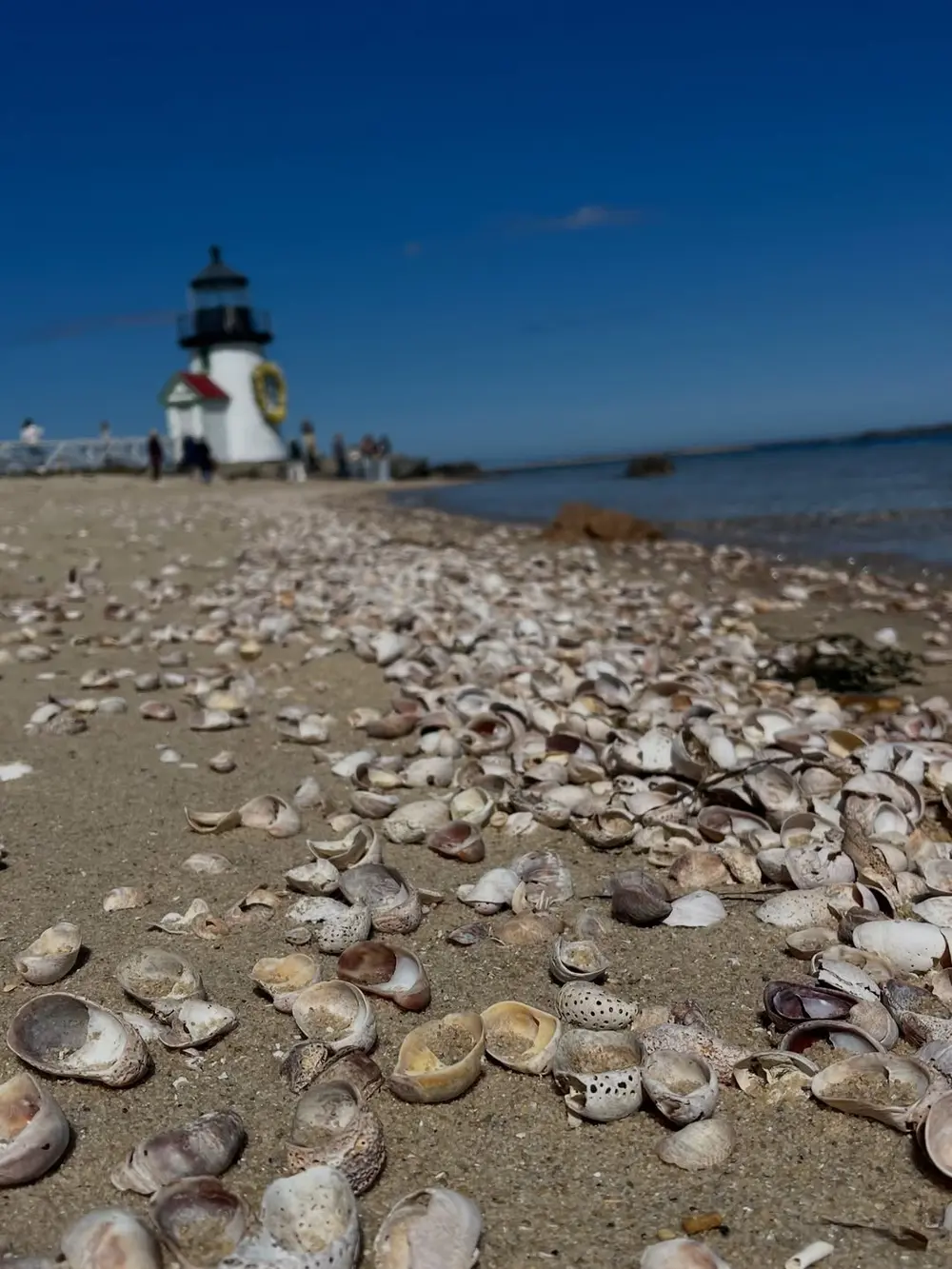
Brant Point Light, the squat white tower everyone photographs from the ferry rail, was first established in 1746, which makes the station the second oldest in the United States after Boston Light. The tower standing there now is the ninth on the spot. The rest kept burning down or washing away.
Best Time to Visit Nantucket
Summer is Nantucket at full volume and full price, ferries booked weeks out and Main Street shoulder to shoulder. It is lovely and I would not talk anyone out of it, but it is not when I would go first. The last weekend of April is. Daffodil Weekend, or Daffy Weekend as everyone calls it, started in 1975 when Jean MacAusland and the Nantucket Garden Club set out to plant bulbs along the roads. Something like three million daffodils bloom along the verges now, and the town builds a festival around them. The 50th ran from April 24 to 26 in 2026.
The centerpiece is an antique car parade that has run since 1978. Owners drive their cars, most built before the war, down Main Street dressed bumper to bumper in daffodils, then out Milestone Road to the village of Siasconset, where the crowd lays out a gleefully competitive tailgate picnic on the green, china and candelabra and all. Fall is the other quiet season worth knowing about, cooler and slower, with bay scallop season opening in November.
Getting Around and Biking Nantucket
You do not need a car here, and bringing one over costs a small fortune. The town is walkable end to end, and a network of paved bike paths reaches almost everywhere else. The Milestone Road path runs about six miles straight out to Siasconset through the open moors, low and rolling and covered in bayberry and scrub oak, with the Atlantic showing at the far end. The Polpis Road path is the prettier way back, roughly eight miles winding past Sesachacha Pond and the cranberry bogs.
On Daffodil Weekend that ride turns into a moving picture. The roadsides go solid yellow the whole way, and half the island is out on two wheels. I cannot think of a better way to take the place in, and the salt air seems to scrub off every last trace of city noise on the way.
Where to Eat and Drink
Two places cover the whole arc of a Nantucket day. Cisco Brewers, southwest of town off Hummock Pond Road, started as the Nantucket Vineyard in 1981, grew a brewery in the founders' backyard in the early 1990s, and added Triple Eight Distillery in 1997. It is all one yard now, open to the air, with communal tables and live music and a rotating line of food trucks doing oysters on the half shell and fish tacos. You can taste beer, island wine, and whiskey in the same afternoon, in your bike clothes, and nobody so much as blinks.
Later, back on Broad Street in town, the Brotherhood of Thieves is the other end of the day. The downstairs room is done as an 1840s whaling bar, brick and low beams and a fireplace, dark even at noon. The name comes from an 1843 antislavery pamphlet written on Nantucket by the abolitionist Stephen S. Foster, which is a very Nantucket thing for a bar to be named after. Order the oysters and something hot and settle in out of the spring wind.
The Bottom Line
The bottom line: I am still a Vineyard person for a quiet week. Nantucket on Daffodil Weekend is a different proposition, the most purely fun the region gets, a whole island agreeing to dress up and show off for three days. Go once in late April and you will understand why people keep going back.
Quick Facts
The essentials, at a glance.
Settled
1659
English purchase from Thomas Mayhew
Main Street
Cobblestone
Ballast stone, laid 1837
Landmark
1746
Brant Point Light, 2nd oldest in the US
Known For
Whaling
Capital of the world, early 1800s
Nantucket on Daffodil Weekend
Nantucket Harbor on Daffodil Weekend, the last full weekend of April, when the whole island wakes up at once after a long quiet winter. A leather jacket over a bright yellow top felt like the right call for a town that had just turned entirely daffodil.
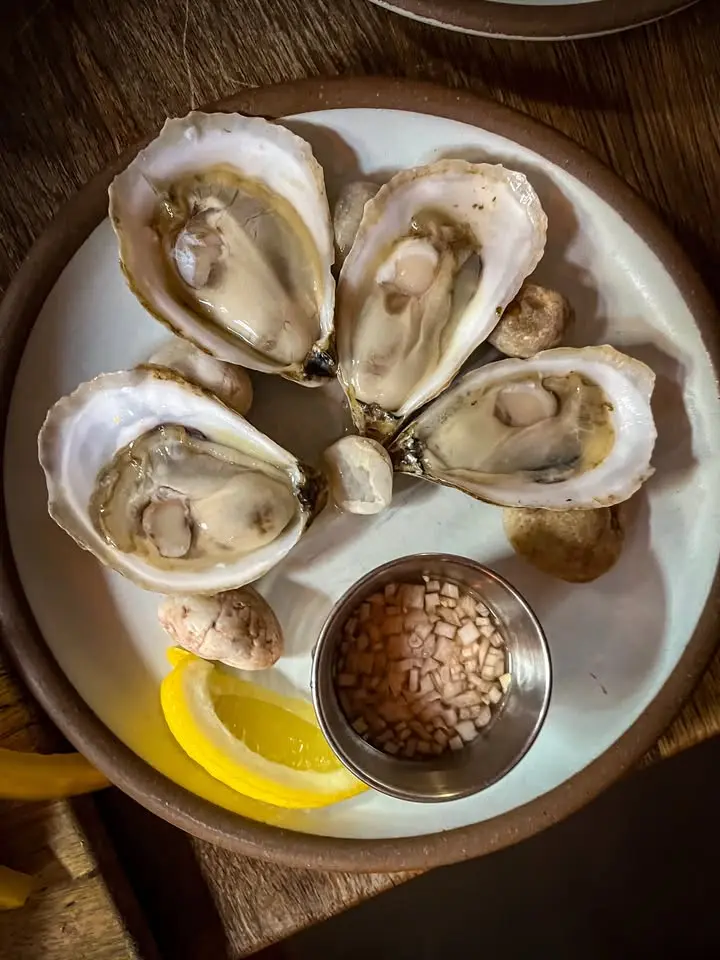
A plate of local oysters, which on Nantucket you can get shucked at a brewery picnic table as easily as at a white tablecloth. Bay scallop season runs November into March, but the oysters hold up the whole year.
Brant Point Light from the shell bank at the harbor mouth, the view you get from the ferry rail on the way in. First lit in 1746, rebuilt nine times since, and still the first and last thing you see of the island.
Jane Austen never wrote about Nantucket, but her last, unfinished novel is about a place doing what Nantucket does every April. Sanditon follows a sleepy coastal village being talked into becoming a fashionable resort by a man convinced that sea air and a little showmanship can turn any shoreline into a destination. Austen died before she could decide whether the scheme would work or humiliate everyone involved in it. Daffodil Weekend is the scheme working. A working island that lost its industry and remade itself into a place people travel to precisely so they can watch each other perform is exactly the transformation she was sketching, ambitious and a little theatrical and finally about a town choosing what it wants to be. The antique cars idling on the cobblestones, the daffodil hats, the tailgates laid out with real silver toward Siasconset, all of it is a Regency promenade run three centuries late, a crowd that has agreed to dress up and observe one another as the whole point of the afternoon.
There is a second, more concrete thread. The years Nantucket's whaling economy came apart line up closely with Austen's writing life, and the two worlds touched once, directly. In April 1814 the Royal Navy extended its blockade to New England, shutting the whaleships in the harbor and cutting the island off from the food and fuel it imported to survive. Nantucket, largely Quaker and against the war from the start, sent its own representatives to negotiate a separate neutrality with the British fleet. Two of Austen's brothers, Francis and Charles, were career officers in that same navy, and Persuasion, the novel of hers most bound up with the sea, came out of the months right after the war ended. While she was handing Captain Wentworth a fortune made at sea, the fleet her brothers served in had just spent a year strangling the one place in America that made its living the same way.
Continue Exploring the New England Coast
Nantucket pairs naturally with the rest of this coastline. Provincetown, out at the tip of Cape Cod and reached by a separate ferry, is the art colony counterpart, Portuguese fishing heritage and gallery windows where Nantucket has Quaker whaling money and shingle. Wellfleet, on the Outer Cape, comes at the same shore from the opposite direction, oyster shacks and a working harbor and no interest in being looked at.
Other Old Money Coastal Resort Towns
Newport, Rhode Island is the other great town near Nantucket built on a fortune from the sea, and the obvious next stop if the mix of old wealth and studied restraint is the appeal. The difference is what each place did with the money. Newport was built by families who wanted to be seen doing it, marble halls along Bellevue Avenue. Nantucket spent almost none of its at all, and that restraint is now the whole look of the island.
Don't Miss the Next One
New essays and travel guides don't run on a schedule, they go up when there's actually something worth saying. Subscribe and I'll let you know the moment one does.
About 70 miles by car to the ferry terminal in Hyannis, roughly 1 hour 20 minutes, then a crossing of about 1 hour on the high speed ferry or 2 hours 15 minutes on the traditional car ferry. There is no bridge to Nantucket, so every trip involves the ferry or a short flight.
How do you get to Nantucket?
By ferry from Hyannis on Cape Cod or by air. The Steamship Authority and Hy-Line Cruises both run passenger ferries year round, about 1 hour on the high speed catamaran and 2 hours 15 minutes on the slower car ferry. Small planes fly to Nantucket Memorial Airport from Boston, New York, and several other Northeast cities.
When is the Nantucket Daffodil Festival?
The last full weekend of April every year. The 2026 festival, the 50th, ran from April 24 to 26. The antique car parade down Main Street and out to Siasconset is the Saturday centerpiece.
Do you need a car on Nantucket?
No. The town is walkable from end to end, and paved bike paths reach the main beaches, the moors, and the village of Siasconset. Bringing a car over on the ferry is expensive and needs a reservation far in advance, and downtown parking is limited, so most visitors skip it.
How long is the bike path to Sconset?
About 6 miles each way along the Milestone Road path, which runs straight out through the moors from the edge of town. The Polpis Road path is a longer alternative at roughly 8 miles, winding past Sesachacha Pond and the cranberry bogs on the way.
What is Nantucket known for?
Being the whaling capital of the world in the late 1700s and early 1800s, and for how completely it preserved the town that era built. The whole island was designated a National Historic Landmark in 1966, and its grey shingled houses and cobblestone Main Street are largely unchanged from the 1840s.
Pin this guide for your next getaway to Nantucket!