Where Little Women was written, and where the Revolution started, in the same twenty minute walk.
Last Updated: August 28, 2026
Getting to Concord
Approximate driving distance and time via major highways, for planning purposes only.
From Philadelphia, PA (City Hall)
5 hr 30 min
~310 miles
From New York City, NY (Times Square)
3 hr 50 min
~215 miles
From Boston, MA (Faneuil Hall)
35 min
~22 miles
A Short History of Concord
Some towns claim one famous resident and spend the next two centuries getting mileage out of it. Concord had, within about a mile of each other, Louisa May Alcott, Ralph Waldo Emerson, Henry David Thoreau, and for a stretch Nathaniel Hawthorne too, an absurd concentration of American letters on ground that also happened to be where the Revolutionary War started. It's a lot for one small Massachusetts town to answer for, and it wears all of it with the kind of quiet, unbothered confidence that only comes from having genuinely earned the reputation.
The town was settled in 1635, one of the first inland settlements in the Massachusetts Bay Colony. The literary era came much later, in the middle of the 1800s, when Emerson made Concord the center of American Transcendentalism and drew the others in around him. What's remarkable now is how little space it all took up. The whole thing fits inside a walkable few blocks.
Orchard House, Where Little Women Was Written
Louisa May Alcott wrote Little Women at Orchard House in 1868, at the small semicircular shelf desk her father built into her bedroom wall specifically so she'd have somewhere to work. Parts of the house date to the 1600s, expanded and reworked over the next two centuries, and the Alcott family lived here from 1858 to 1877, long enough for it to become the closest real model for the March family's home. Walking through it now, the parallel isn't subtle. This is the house Jo March is based on living in, written by the woman who actually lived in it.
The novel's success was fast and total, and it changed the family's circumstances almost overnight, a detail worth sitting with given how thin the margins were before it. Alcott wrote fast, under real financial pressure, supporting a family that had spent years in genteel, precarious poverty, not so different from the March family she invented.
The Governess Thread
Meg March, the eldest of the four sisters, works as a governess for the wealthy King family for a stretch of the novel. It was one of the very few respectable ways a genteel but poor young woman could earn money without losing her social standing, and Jo takes a version of the same path later, teaching and writing out of a New York boardinghouse. Alcott didn't invent that detail. It reflected a real, common route for women in exactly the March family's position, educated, well connected, and completely without money of their own. The lessons Meg would have drilled into the King children, French, music, drawing, deportment, were the same list a proper Regency education ran through half a century earlier and an ocean away.
It's the same uneasy social position I've written about at length, working through who the governess actually was, from Austen's England to Gilded Age America. Meg March is simply the American, mid century version of the same figure, proof that the role, and the particular tightrope it asked a woman to walk, never stayed confined to Regency drawing rooms or English novels. The same path turns up again a generation later in Gilded Age Newport, where Alva Vanderbilt kept a team of governesses drilling her daughter Consuelo toward a title.
If you want to see how exacting that training actually was, The Accomplished Young Lady lets you sit the examination one accomplishment at a time, graded by a governess considerably stricter than any King family would have hired.
A Town With an Absurd Literary Density
Orchard House sits next door to The Wayside, which was actually the Alcott family's home before it, later sold to Nathaniel Hawthorne, who lived there while writing some of his own later work. Ralph Waldo Emerson's house is a short walk away, and Emerson was more than a neighbor to the Alcotts, he was a mentor, a lender of books, and for a period an informal patron. Henry David Thoreau, Emerson's protege, wrote Walden a couple of miles down the road at the pond that gave the book its name, and taught the young Louisa botany and woodcraft on walks through the same countryside that turns up, transformed, in her fiction.
It's a genuinely strange thing to process standing in the middle of it, an ordinary looking New England town where you can walk between the homes of four major American writers in under 20 minutes, several of whom knew each other personally and shaped each other's work in real time.
The Old North Bridge and the Start of the War
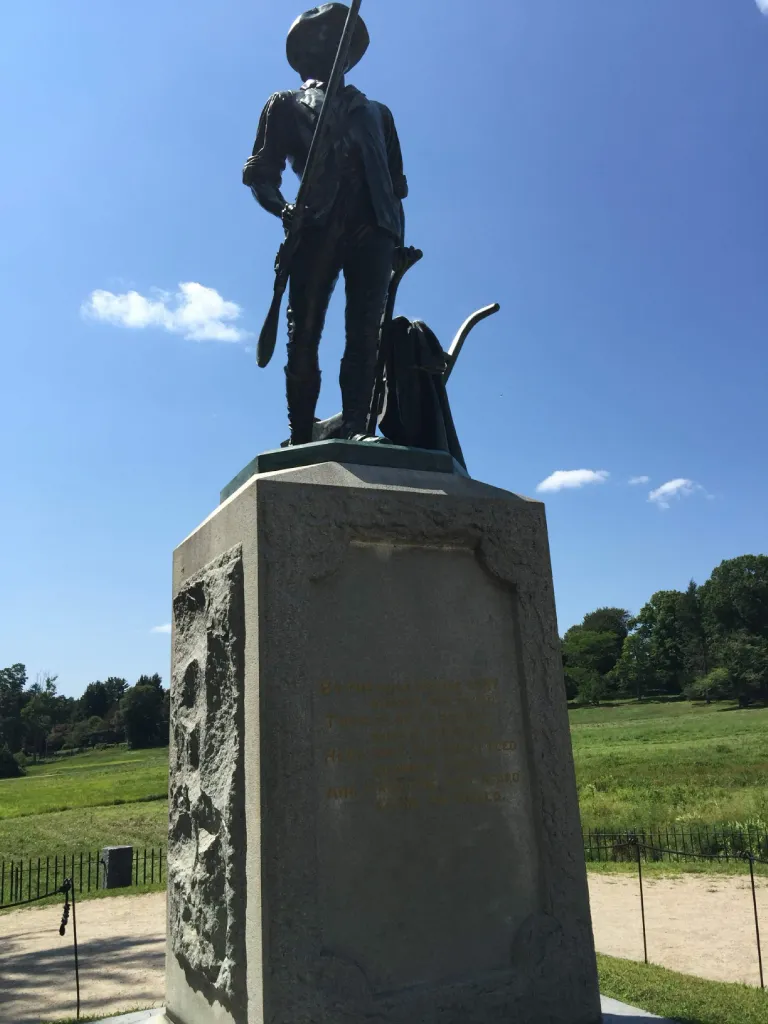
Concord's other claim predates the literary one by nearly a century. On April 19, 1775, colonial militia met British troops at the Old North Bridge, and the fighting that followed the earlier clash at Lexington that same morning marked the opening engagement of the Revolutionary War. Emerson himself, decades later, gave the moment its most famous line, "the shot heard round the world," in a hymn written for the dedication of the battle monument. It's a nice small closing of the loop between the town's two eras, the man who shaped its literary identity also wrote the line that defined its military one.
The bridge and battlefield are preserved now as part of Minute Man National Historical Park, an easy stop on the same visit, a 15 minute walk from ground that, less than a century later, would produce one of the most enduring works of American fiction.
Where to Eat
I had lunch at Helen's, at 17 Main Street, a genuinely nice casual diner right in the cute part of town. The Denisevich family has been feeding Concord in one form or another since the 1930s, and the current version has been Helen's since 2003. It's the kind of unfussy counter and booth place that a town this heavy with historic sites badly needs, a sandwich and a coffee and a seat, no reservation, no theme.
Best Time to Visit Concord
Late September and October is the obvious pick, foliage along the Old North Bridge and around Walden Pond, and Orchard House still on its full tour schedule. Patriots' Day in April brings the battle reenactments and a very crowded morning at the bridge, worth it once if you like that sort of thing. Spring is quiet and easy, the best window for Orchard House before the school groups fill the calendar. Concord runs fine as a day trip, the historic core, Orchard House, The Wayside, Emerson's home, and Sleepy Hollow Cemetery all sit within walking distance once you've parked or stepped off the train.
The Bottom Line
The bottom line: Concord is a small town carrying two outsized histories at once, the start of a revolution and a fair chunk of American literature, and you can walk the whole thing in an afternoon. Do Orchard House, do the bridge, eat at Helen's.
Quick Facts
The essentials, at a glance.
Settled
1635
Orchard House
1868
Little Women written here
Old North Bridge
Apr 19, 1775
First battle of the Revolution
Known For
Books & Battle
Transcendentalists and 1775
Concord in Pictures
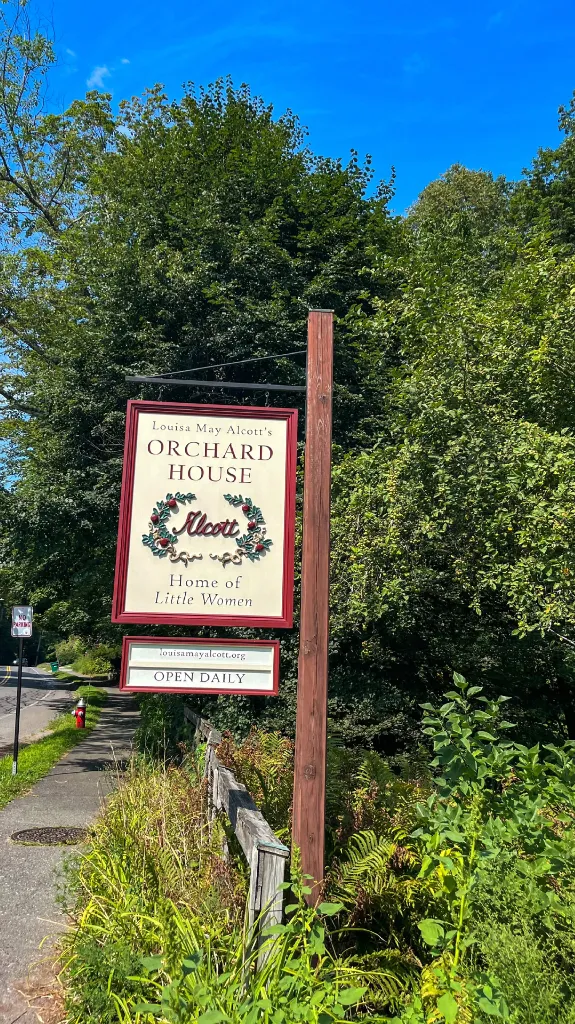
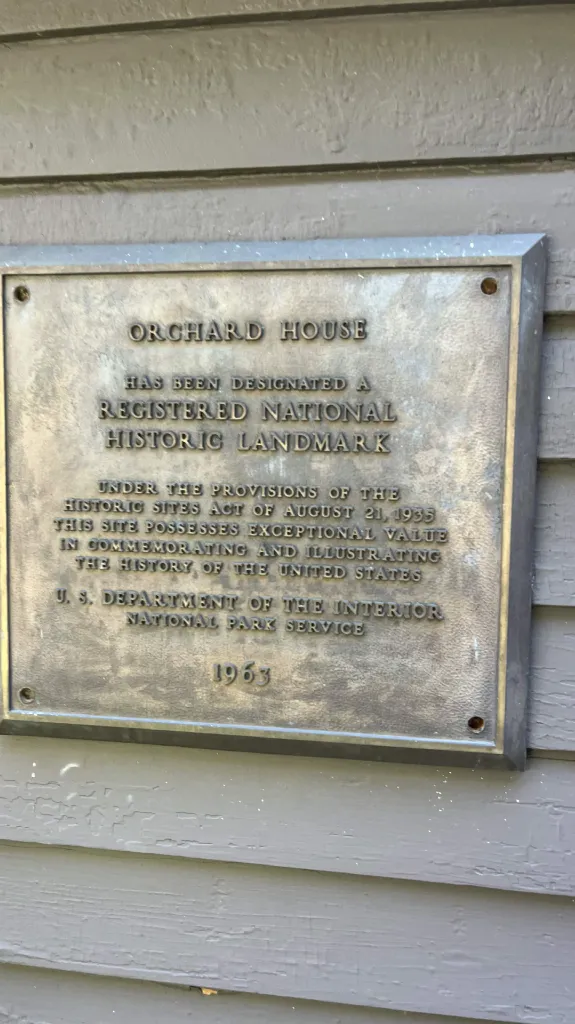
Orchard House on Lexington Road is the one to book ahead for. The tour walks you through the actual rooms behind Little Women, including the shelf desk where Louisa May Alcott wrote it in 1868. It's a rare case of a literary landmark that delivers exactly what it promises.
The Alcotts kept a working garden and orchard here, which is where the house gets its name. In summer the beds out front are still planted, and it's an easy thing to stand in the yard and match it against the version in the book.
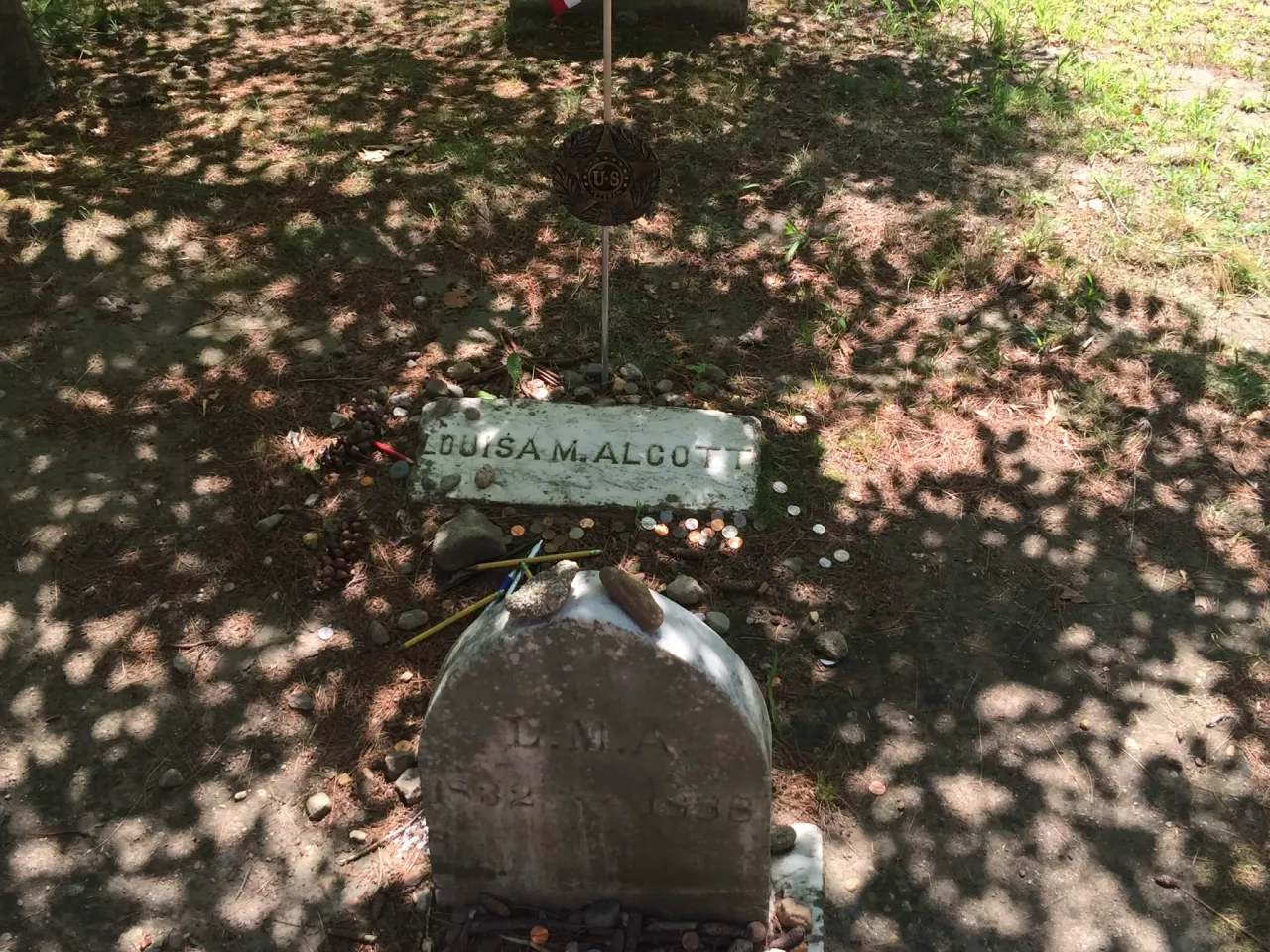
Authors' Ridge in Sleepy Hollow Cemetery is where Alcott, Emerson, Thoreau, and Hawthorne are all buried, within a short walk of one another. Visitors leave pens and pencils on Alcott's stone. It's quieter and stranger than it sounds, and it's free.
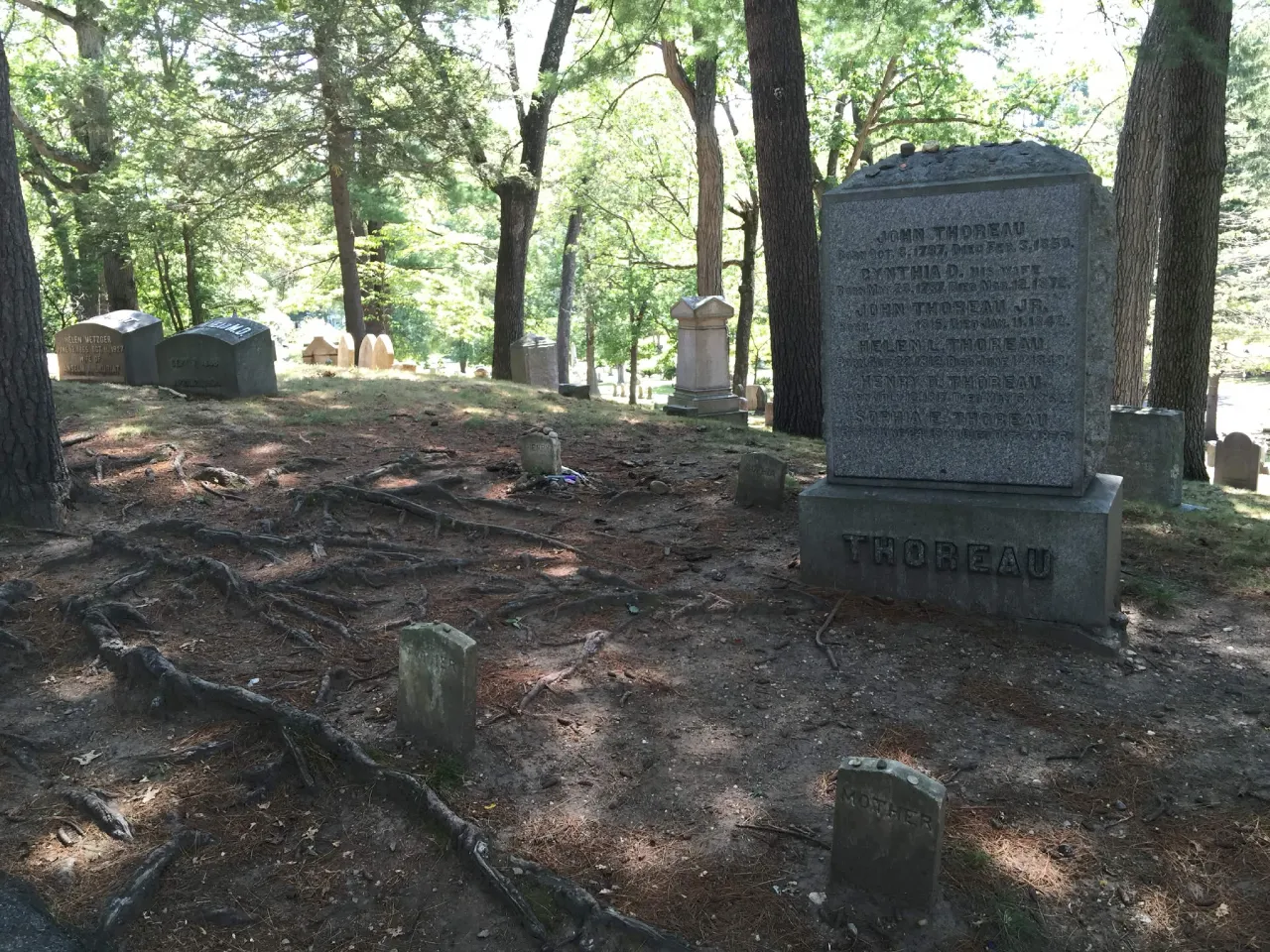
Thoreau's marker is famously small, just "Henry" on a low stone, a few steps from the others. Walden Pond, where he actually did the living the book is about, is a couple of miles south and worth the detour if you have the afternoon.
Jane Austen never crossed the Atlantic, and she died 50 years before Little Women was published. She would still have recognized exactly what Alcott was doing with Meg March. Both writers used the governess to mark the precise line between a genteel family and a poor one, a woman raised to be a lady and then sent out to earn wages teaching someone else's children. Austen wrote that figure over and over, most warmly as Miss Taylor, the governess who raised Emma Woodhouse and then married comfortably into the role of Mrs. Weston. I've argued elsewhere that Miss Taylor's job is so specific that Clueless had to split it across several characters to adapt it for 1995. Meg March is that same role, moved to Massachusetts and pushed forward 60 years.
That's the thread that earns Concord a spot on a site that's mostly about Austen. Stand in Orchard House, look at the desk, and you're looking at the workplace of a woman who wrote her way out of the exact economic trap her own eldest sister character never quite escaped. Austen would have understood the stakes down to the pound.
Continue Exploring New England
Concord pairs naturally with the coast. Plymouth, about an hour south, is the other half of the Massachusetts origin story, the Rock, the Mayflower, and the 1620 landing. Newport, a bit under two hours away, is where the governess thread picks up again a generation later among the Gilded Age families, and Nantucket is the whaling money island a ferry ride beyond that.
More on the Governess
If Meg March sent you down this particular rabbit hole, the full write up is Who Was the Governess, covering her education, her pay, and her strange spot in the household, from Austen through Alcott. Or skip the reading and take the lessons yourself over at The Accomplished Young Lady.
Don't Miss the Next One
New essays and travel guides don't run on a schedule, they go up when there's actually something worth saying. Subscribe and I'll let you know the moment one does.
About 20 miles northwest of Boston, roughly 35 minutes by car. The MBTA Commuter Rail Fitchburg Line also runs from North Station to Concord in about 40 minutes, which makes it an easy day trip without a car.
Can you visit the house where Little Women was written?
Yes. Louisa May Alcott wrote Little Women in 1868 at Orchard House, on Lexington Road, and the house is open for guided tours most of the year. Her original semicircular shelf desk, built into her bedroom wall, is still there.
What is Concord, Massachusetts famous for?
Two things. It was the site of the first organized battle of the Revolutionary War at the Old North Bridge on April 19, 1775, and it was home to Louisa May Alcott, Ralph Waldo Emerson, Henry David Thoreau, and briefly Nathaniel Hawthorne, all within walking distance of each other.
Where are the Concord authors buried?
On Authors' Ridge in Sleepy Hollow Cemetery. Alcott, Emerson, Thoreau, and Hawthorne all have graves there, within a short walk of one another, and the cemetery is open to visitors.
What is the best time to visit Concord?
Late September and October for fall foliage along the Old North Bridge and Walden Pond. Patriots' Day in April brings the battle reenactments, and spring is quiet and good for Orchard House before the school groups arrive.
Is Walden Pond in Concord?
Yes. Walden Pond, where Thoreau lived from 1845 to 1847 and wrote Walden, is about 2 miles south of the town center and is now a state reservation with a replica of his cabin and a swimming beach.